Swimmer’s Shoulder: Causes, Treatment & Recovery Guide (UAE)
Swimmer’s Shoulder: A Surgeon’s Guide to Diagnosis, Treatment, and Recovery Authored by The Project Team, SEO Expert, this guide brings you the...
Swimmer’s Shoulder: A Surgeon’s Guide to Diagnosis, Treatment, and Recovery
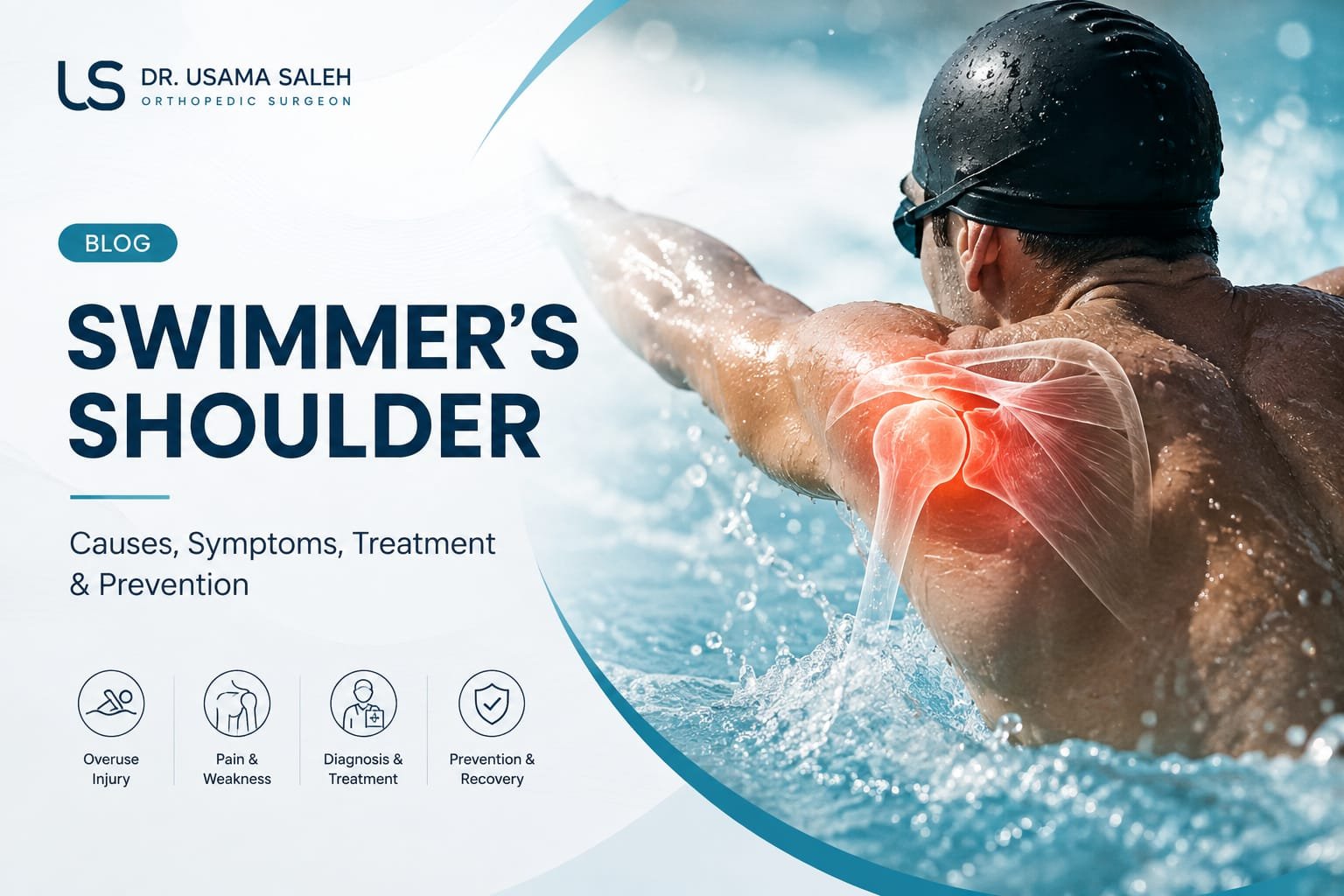
Authored by The Project Team, SEO Expert, this guide brings you the authoritative insights of Dr. Usama Saleh, a fellowship-trained orthopedic, sports injury, and trauma surgeon trusted across the UAE for restoring strength and movement. Experiencing persistent shoulder pain can sideline any athlete. Swimmer’s shoulder, also known as shoulder impingement syndrome, is a common condition affecting those who perform repetitive overhead arm movements. This comprehensive guide from Dr. Usama Saleh details its causes, symptoms, diagnosis, and advanced treatment options, ensuring you understand your path to recovery.
Understanding Swimmer’s Shoulder: What It Is and Who It Affects
Swimmer’s shoulder refers to a spectrum of conditions typically characterized by pain in the shoulder, particularly during or after overhead activities. It’s most commonly associated with shoulder impingement syndrome, where the tendons of the rotator cuff (specifically the supraspinatus) and the subacromial bursa become pinched between the humerus (upper arm bone) and the acromion (part of the shoulder blade) during arm elevation.
While prevalent in swimmers, this condition also impacts other athletes and individuals involved in occupations requiring repetitive overhead arm movements. These include:
- Baseball pitchers and tennis players
- Volleyball players and weightlifters
- Construction workers or painters
The shoulder’s complex anatomy, comprising bones, ligaments, tendons, and muscles, is particularly vulnerable to overuse injuries from such activities.
Causes of Swimmer’s Shoulder and Risk Factors
The primary cause of swimmer’s shoulder is repetitive microtrauma to the shoulder joint structures, specifically the rotator cuff tendons and bursa. Each overhead stroke, throw, or lift contributes to wear and tear, leading to inflammation and irritation.
Several factors increase the risk of developing this condition:
- **Improper Technique:** Poor swimming form, such as a “lazy elbow” catch or inadequate body roll, places excessive stress on the shoulder.
- **Muscle Imbalances:** Weakness in the rotator cuff muscles or scapular (shoulder blade) stabilizers can lead to abnormal shoulder mechanics.
- **Fatigue and Over-training:** Pushing too hard without adequate rest prevents muscle recovery and increases injury risk.
- **Shoulder Laxity/Instability:** Excessive looseness in the shoulder joint can make it more prone to impingement.
- **Lack of Warm-up/Cool-down:** Insufficient preparation or recovery after exercise can contribute to muscle stiffness and injury.
Understanding these contributing factors is crucial for both prevention and effective treatment of shoulder pain swimming overhead.
Why Do Young Athletes Experience Shoulder Pain Swimming Overhead?
Children and adolescents are particularly susceptible to shoulder pain young athletes experience due to unique developmental factors. Their growth plates are still open, and their bodies are undergoing rapid changes, making them vulnerable to overuse injuries.
Intense training schedules, early specialization in a single sport like swimming, and inadequate strength and conditioning to support the demands of overhead movements contribute significantly to this risk. Coaches and parents must prioritize proper technique, progressive training loads, and sufficient rest for these athletes to prevent swimmer’s shoulder.
Recognizing the Symptoms of Swimmer’s Shoulder
The symptoms of swimmer’s shoulder can vary in intensity and progression, but they typically involve pain and discomfort in the shoulder region. Early recognition is key for timely intervention.
Common signs and symptoms include:
- Pain in the front or side of the shoulder, often radiating down the arm.
- Pain that worsens with overhead activities, such as swimming, throwing, or lifting.
- Aching or throbbing pain, especially at night or when lying on the affected shoulder.
- Stiffness and limited range of motion, making it difficult to raise the arm.
- Weakness in the shoulder, particularly during specific movements.
- Clicking, popping, or grinding sensations with arm movement.
If left untreated, these symptoms can progress from mild discomfort to chronic pain, significantly impacting daily activities and athletic performance. For persistent shoulder blade muscle pain, seeking expert advice is essential.
Diagnosing Swimmer’s Shoulder: A Comprehensive Approach
Accurate diagnosis of swimmer’s shoulder requires a thorough evaluation by an orthopedic specialist. Dr. Usama Saleh employs a multi-faceted approach to identify the underlying cause of your shoulder pain.
Clinical Examination and Impingement Tests
The diagnostic process begins with a detailed medical history and a comprehensive physical examination. The doctor will assess your range of motion, strength, and stability, looking for tenderness and specific pain points. Special tests, such as Neer’s and Hawkins-Kennedy impingement tests, are performed to reproduce symptoms and pinpoint the source of discomfort.
Imaging Studies: X-rays, MRI, and Ultrasound
To confirm the diagnosis and rule out other conditions, imaging studies are often necessary:
- **X-rays:** Primarily used to assess bone structure, identify bone spurs (osteophytes), or detect any signs of arthritis.
- **MRI (Magnetic Resonance Imaging):** Provides detailed images of soft tissues, making it excellent for evaluating the rotator cuff tendons, bursa, ligaments, and cartilage for inflammation, tears, or swelling.
- **Ultrasound:** A dynamic imaging tool that can visualize tendons and muscles in real-time motion, helping to identify impingement or fluid accumulation.
These studies help differentiate swimmer’s shoulder from other conditions like frozen shoulder, bursitis, or specific shoulder blade pain causes.
Treatment Options for Swimmer’s Shoulder: Conservative vs. Surgical
Treatment for swimmer’s shoulder typically begins with conservative approaches. However, for persistent symptoms or structural damage, surgical intervention may be considered. Dr. Usama Saleh provides tailored treatment plans based on individual needs.
Conservative Management: Non-Surgical Approaches
Most cases of swimmer’s shoulder respond well to conservative treatments:
- **Rest and Activity Modification:** Avoiding or reducing activities that aggravate the shoulder is paramount to allow healing.
- **R.I.C.E. Protocol:** Rest, Ice, Compression, and Elevation can help manage pain and inflammation, especially in the acute phase.
- **Anti-inflammatory Medications (NSAIDs):** Over-the-counter or prescription non-steroidal anti-inflammatory drugs can reduce pain and swelling.
- **Corticosteroid Injections:** Injections of corticosteroids into the subacromial space can provide temporary pain relief and reduce inflammation, often used when physical therapy alone isn’t sufficient.
Physical Therapy for Swimmer’s Shoulder: What Exercises Really Help?
Physical therapy is a cornerstone of conservative treatment, focusing on:
- **Pain Relief and Inflammation Reduction:** Modalities like ultrasound, electrical stimulation, and manual therapy.
- **Restoring Range of Motion:** Gentle stretching and mobilization exercises to improve flexibility.
- **Strengthening Rotator Cuff and Scapular Muscles:** Targeted exercises using resistance bands, light weights, or bodyweight to improve stability and strength. This is crucial for long-term how to strengthen your shoulder health.
- **Improving Posture and Biomechanics:** Correcting imbalances and refining movement patterns to reduce stress on the shoulder.
A personalized physical therapy program is developed to address specific deficits and facilitate a safe return to activity.
Surgical Intervention: A Surgeon’s Perspective on Advanced Treatment
When conservative treatments fail to provide relief after several months, or if there’s significant structural damage such as a rotator cuff tear, surgical intervention may be necessary. Dr. Usama Saleh, as a fellowship-trained surgeon, offers advanced surgical solutions for swimmer’s shoulder.
Criteria for Considering Surgery for Swimmer’s Shoulder
Surgery is typically considered for swimmer’s shoulder if:
- Conservative treatments have been attempted for 6-12 months without significant improvement.
- There is a confirmed rotator cuff tear that is unlikely to heal on its own.
- Significant bone spurs or anatomical abnormalities are causing persistent impingement.
- The patient experiences ongoing pain, weakness, and functional limitations impacting quality of life or athletic performance.
Types of Surgical Procedures for Shoulder Impingement
The most common surgical procedures for swimmer’s shoulder include:
- **Arthroscopic Decompression (Subacromial Decompression):** This minimally invasive procedure involves removing inflamed bursa and shaving down any bone spurs on the acromion to create more space for the rotator cuff tendons, relieving impingement.
- **Rotator Cuff Repair:** If a rotator cuff tear is present, the torn tendon is reattached to the bone. This can be performed arthroscopically or through a small open incision, depending on the tear’s size and complexity. For more details, explore Rotator Cuff Repair Surgery Dubai.
- **Distal Clavicle Excision (DCE):** In cases where arthritis of the acromioclavicular (AC) joint also contributes to pain, a small portion of the clavicle (collarbone) may be removed.
These procedures aim to alleviate pain, restore function, and prevent further damage to the shoulder joint.
Rehabilitation and Recovery from Swimmer’s Shoulder: Getting Back in the Game
Whether treated conservatively or surgically, rehabilitation is essential for a successful recovery from swimmer’s shoulder. The process is typically phased, progressing from pain management to restoring full strength and function.
Phased Rehabilitation Protocols
- **Acute Phase (Weeks 0-6):** Focuses on pain and inflammation control, protecting the healing tissues (especially after surgery), and gentle range of motion exercises.
- **Sub-Acute Phase (Weeks 6-12):** Gradually increases range of motion, introduces light strengthening exercises for the rotator cuff and scapular stabilizers, and begins to improve endurance.
- **Return to Sport/Activity Phase (Weeks 12+):** Progresses to sport-specific drills, plyometrics, and advanced strengthening. This phase emphasizes proper biomechanics and gradual return to full activity under supervision.
Expected Recovery Timelines
Recovery timelines vary significantly based on the severity of the condition and the chosen treatment:
- **Conservative Treatment:** Many individuals experience significant improvement within 6-12 weeks of consistent physical therapy and activity modification. Full return to sport can take 3-6 months.
- **Surgical Treatment:** Recovery is longer, with initial healing taking 6-12 weeks. A full return to demanding overhead activities or competitive swimming can take 6-12 months, sometimes longer, depending on the complexity of the surgery (e.g., rotator cuff repair).
Adherence to the prescribed rehabilitation program is critical for optimal outcomes and preventing recurrence. For a personalized assessment, consider taking our Pain Assessment Quiz.
Prevention Strategies: How to Avoid Swimmer’s Shoulder
Preventing swimmer’s shoulder is paramount, especially for athletes and those engaged in repetitive overhead activities. Proactive measures can significantly reduce risk.
Proper Swimming Technique and Coaching
Working with a qualified coach to refine swimming technique is one of the most effective prevention strategies. Focus on:
- **High Elbow Catch:** Keeping the elbow high during the pull phase to reduce stress on the rotator cuff.
- **Efficient Body Roll:** Rotating the torso to engage core muscles and distribute the workload, preventing excessive strain on the shoulder.
- **Proper Hand Entry:** Entering the water with a slightly bent elbow, hand flat, and fingers pointed forward, avoiding direct impact on the shoulder.
Strength and Conditioning Programs for Overhead Athletes
A balanced strength training program is crucial. It should include:
- **Rotator Cuff Strengthening:** Exercises like internal and external rotations with resistance bands.
- **Scapular Stabilizer Strengthening:** Exercises focusing on the muscles around the shoulder blade, such as rows, Y-T-W raises, and push-ups plus.
- **Core Strength:** A strong core provides a stable base for all arm movements.
- **Posterior Chain Strengthening:** Balancing anterior shoulder muscles with posterior muscle development to prevent imbalances.
Flexibility, Mobility, and Gradual Training Loads
- **Regular Stretching:** Maintain good flexibility in the shoulder, chest, and upper back.
- **Mobility Drills:** Incorporate dynamic stretches and mobility exercises specific to overhead movements.
- **Gradual Progression:** Avoid sudden increases in training volume or intensity. Gradually build up load to allow the body to adapt.
- **Listen to Your Body:** Pay attention to early signs of fatigue or discomfort and allow for adequate rest and recovery.
What’s New in Swimmer’s Shoulder Treatment ?
As of July 21, 2026, the fundamental principles of diagnosing and treating swimmer’s shoulder remain consistent, emphasizing conservative measures first. However, there’s a growing focus on personalized rehabilitation programs, leveraging advanced biomechanical analysis to identify subtle technique flaws and muscle imbalances more precisely. This allows for highly targeted physical therapy interventions.
Furthermore, the integration of regenerative medicine techniques, such as Platelet-Rich Plasma (PRP) injections, continues to be explored for their potential to enhance tissue healing in chronic tendinopathy cases, though their role in acute swimmer’s shoulder is still under active research and not yet a standard primary treatment JIS Orthopedics. Surgical techniques continue to evolve towards even less invasive arthroscopic procedures, aiming for quicker recovery times and reduced post-operative pain.
When to See a Doctor or Surgeon for Your Shoulder Pain
Knowing when to seek professional medical evaluation is crucial. While minor aches can often be managed with rest and ice, certain symptoms warrant a visit to an orthopedic specialist.
You should consult a doctor if you experience:
- Persistent shoulder pain that doesn’t improve with rest or home remedies after a few days.
- Pain that interferes with daily activities or sleep.
- Significant weakness or inability to lift your arm.
- Numbness, tingling, or radiating pain down the arm.
- A sudden, sharp pain after an injury or pop in the shoulder.
An initial consultation with Dr. Usama Saleh will involve a thorough examination and discussion of your symptoms and history to determine the best course of action for your shoulder pain.
Frequently Asked Questions About Swimmer’s Shoulder
How long does it take for swimmer’s shoulder to heal?
Healing time for swimmer’s shoulder varies. Mild cases with conservative treatment can improve in 6-12 weeks. More severe cases, or those requiring surgery, may take 6-12 months or longer for a full return to activity, depending on the individual and adherence to rehabilitation.
How do you treat swimmer’s shoulder at home?
At-home treatment often includes rest from aggravating activities, applying ice to reduce inflammation, and taking over-the-counter NSAIDs for pain. Gentle stretching and strengthening exercises, as advised by a professional, can also be beneficial once acute pain subsides.
What are the best strengthening exercises for swimmer’s shoulder?
Effective strengthening exercises target the rotator cuff and scapular stabilizers. Examples include external and internal rotations with resistance bands, prone Y-T-W raises, and rows. Always perform these with proper form and under guidance to avoid further injury.
Is swimming bad for shoulder impingement?
Swimming itself isn’t inherently bad for shoulder impingement, but improper technique, excessive volume, or insufficient rest can aggravate it. Modifying strokes, reducing intensity, and focusing on rehabilitative exercises are key to continuing swimming safely while recovering from swimmer’s shoulder.
What does swimmer’s shoulder feel like when it’s getting better?
As swimmer’s shoulder improves, you’ll notice a reduction in pain, especially during overhead movements and at night. Your range of motion will increase, and you’ll experience less stiffness and improved strength. Gradual return to activities will become more comfortable.
Conclusion
Swimmer’s shoulder is a common but treatable condition that can significantly impact quality of life and athletic performance. By understanding its causes, recognizing symptoms early, and adhering to a tailored treatment and rehabilitation plan, individuals can achieve effective recovery. Whether through conservative management or advanced surgical techniques, restoring full shoulder function is the ultimate goal for those suffering from swimmer’s shoulder.
Ready to Take the Next Step?
If you’re in Dubai, the UAE, and experiencing persistent shoulder pain or suspect you have swimmer’s shoulder, don’t let it hinder your active life. Dr. Usama Saleh, a trusted fellowship-trained orthopedic surgeon, offers personalized diagnosis and advanced treatment options. Schedule a consultation with Dr. Usama Saleh today to explore your treatment options and start your journey towards recovery and renewed confidence, especially if you hold UAE corporate health insurance.