Shoulder Instability Treatment: Stop Recurrent Dislocations
Is your shoulder keeps popping out, feeling loose, or dislocating repeatedly? Shoulder instability whether from a traumatic shoulder dislocation, recurrent shoulder dislocation, or an unstable shoulder from natural ligament laxity severely limits your daily life and sport. Dr. Usama Saleh, Dubai’s fellowship-trained shoulder specialist with 23+ years of experience, provides comprehensive shoulder instability treatment for all forms: traumatic shoulder dislocation, atraumatic shoulder instability, multidirectional shoulder instability, and anterior or posterior shoulder instability. From first-time dislocations to complex recurrent cases, our personalized approach restores stability, eliminates the fear of dislocation, and returns you to confident, active living in Dubai and the UAE.

Understanding
Shoulder Instability
The shoulder is the body’s most mobile joint and its most vulnerable to instability.
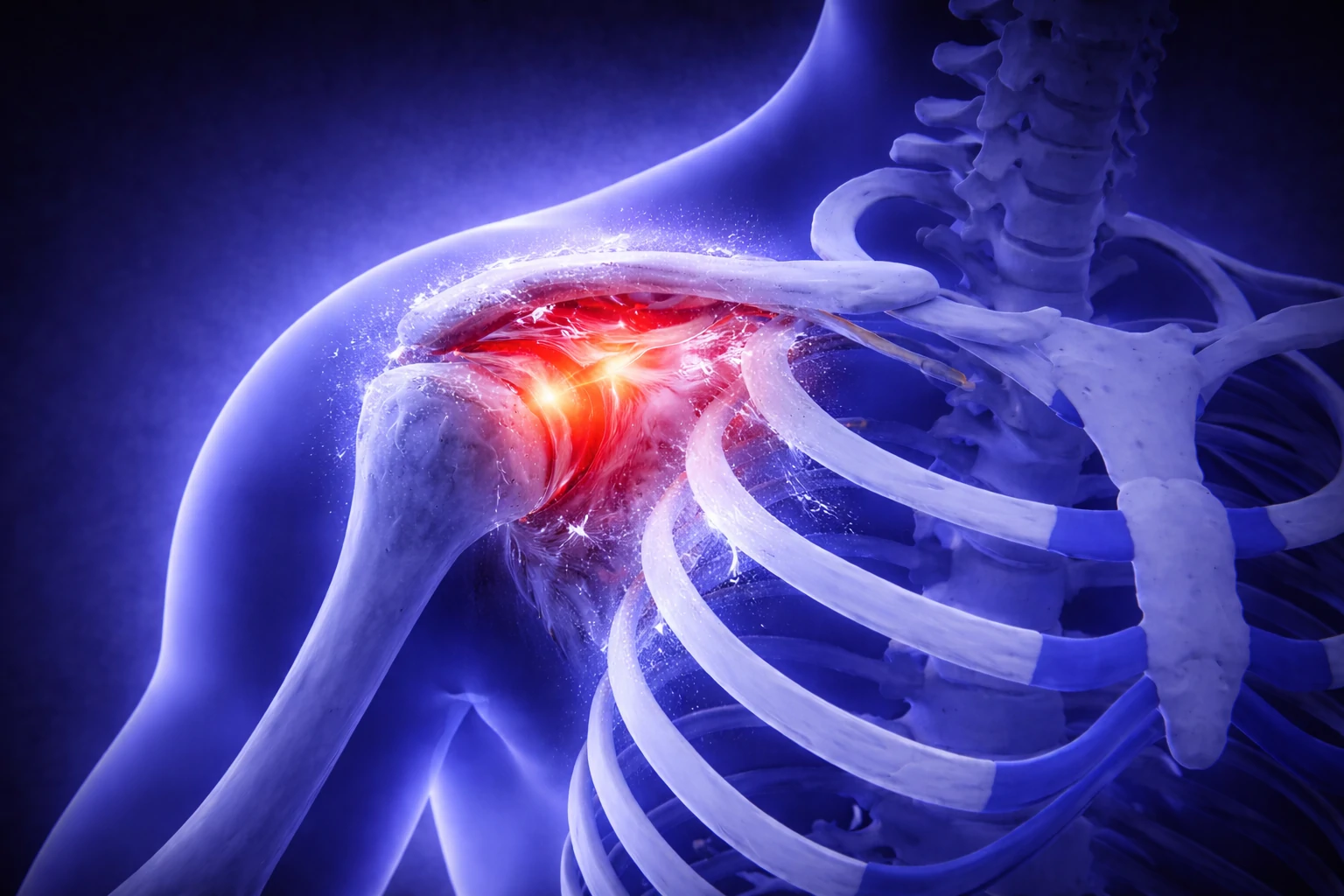
Shoulder instability occurs when the structures that normally keep the ball (humeral head) centered in the socket (glenoid) are damaged or loose, allowing the shoulder to subluxate (slip partially out) or fully dislocate.
The shoulder dislocation symptoms can range from a sudden traumatic complete dislocation requiring immediate reduction, to a chronic loose shoulder joint that gives out unpredictably during daily activity or sport.
At our Dubai clinic, Dr. Usama provides expert shoulder instability treatment for every patient. Some respond excellently to non-surgical shoulder instability treatment with dedicated physical therapy. Others, particularly young athletes in contact sports, require surgical stabilization for lasting results.

Our approach begins with an accurate diagnosis and develops into a plan based on your instability type, activity demands, and personal goals.
Symptoms Of Shoulder Instability
Recognizing your symptoms helps guide the right diagnosis and treatment. Shoulder instability presents differently depending on type and severity.
Primary Symptoms
- Recurrent dislocation: Shoulder pops completely out and must be reduced professionally.
- Shoulder subluxation: Shoulder slips partially out then slides back in spontaneously (a ‘clunk’).
- Shoulder feels loose or giving out unpredictably during certain movements.
- Apprehension shoulder: Fear and guarding when arm is placed in vulnerable overhead-rotated positions.
- Dead arm sensation: Sudden arm weakness and numbness in specific positions.
Additional Symptoms
- Shoulder pain with overhead or rotated movements.
- Shoulder weakness — difficulty with strength activities or overhead lifting.
- Clicking, clunking, or grinding sensations during movement.
- Varying dislocation symptoms: acute (sudden severe pain, visible deformity) vs chronic (apprehension, functional avoidance).
- Progressive loss of confidence in the shoulder — avoiding sports, activities, and specific positions.
Acute Dislocation (First-Time)
Immediate severe pain, visible deformity, and complete inability to move the arm. The shoulder must be reduced (put back) by a medical professional.
Chronic Instability (Recurrent)
Repeated dislocated shoulder or shoulder subluxation episodes. Each individual episode damages the labrum and ligaments further, resulting in progressive instability with less force required for each subsequent dislocation.
Leads to perpetual fear and functional avoidance of activities. Requires a comprehensive specialist shoulder instability treatment evaluation.
How Is Shoulder
Instability Diagnosed?
Accurate assessment forms the foundation of precision surgery. Dr. Usama combines targeted physical tests with advanced 3D imaging metrics to determine the exact degree of instability.
Board certified in orthopedics surgery
Clinical Examination
Diagnosis begins with a detailed history of onset, frequency, and direction. Specialized testing includes the Apprehension Test (reproducing fear of dislocation) and the Relocation Test (applying posterior pressure to relieve apprehension). Additional metrics like the load and shift, sulcus sign, anterior/posterior drawer tests, ROM, and generalized ligamentous laxity screens are thoroughly executed.
Imaging Studies
Shoulder MRI: The definitive gold standard for analyzing labral tears (Bankart lesion, SLAP tear) and cartilage damage. MR arthrograms enhance labral visualization for surgical tracking.
X-rays & 3D CT: Critical for measuring glenoid bone loss percentage, directly guiding the vital decision between an arthroscopic Bankart repair versus an open Latarjet procedure.


Treatment Options For Shoulder Instability
Shoulder instability treatment is highly individualized. Dr. Usama provides the complete spectrum from conservative management to advanced surgical stabilization.
Non-Surgical Management
Indications & Best For:
First-time dislocation (>35 yrs, lower activity), atraumatic instability, multidirectional instability, mild subluxations, or patient preference to avoid surgery.
Shoulder Instability Exercises (12-16 Week Protocol)
Clinical Success Rates:
Surgical Stabilization
Arthroscopic Bankart Repair
85-95% Success RatePerformed via 3-4 tiny incisions. Reattaches the torn labrum (Bankart lesion) to the glenoid rim using high-tensile suture anchors while tightening the capsule and ligaments. Requires a sling for 4-6 weeks; full contact sports return within 6-9 months.
Latarjet Procedure
90-95% Success RateAn open coracoid bone transfer indicated for significant glenoid bone loss (>20-25%) or failed prior arthroscopic surgeries. Highly effective even in complex recurrent scenarios. Recovery spans 9-12 months for contact athletic return.
Capsular Shift
70-85% Success RateSurgical plication and global tightening of the stretched joint capsule. Strictly indicated for true multidirectional shoulder instability only after 6-12 months of failed, high-compliance conservative rehabilitation programs.
Do I need surgery for shoulder instability?
The definitive clinical path depends heavily on your age, specific athletic/activity level, structural ligamentous damage, recurrence frequency metrics, and presence of critical bone loss. Dr. Usama maps and explains your exact custom risk-to-benefit ratio clearly during your tracking consultation.
What Causes Shoulder Instability?
Understanding what causes Shoulder Instability helps guide both treatment and prevention strategies.
Traumatic Instability
Atraumatic Instability
Multidirectional (MDI)
Traumatic Shoulder Instability
Typically caused by a fall on an outstretched arm, contact sports collisions, or a direct blow to the joint.
The initial traumatic shoulder dislocation tears the Bankart lesion (labrum) and severely stretches the surrounding ligaments. Each subsequent dislocation worsens the structural damage.
Atraumatic Shoulder Instability
Develops gradually without a single significant injury or macro-trauma.
Primarily due to naturally loose ligaments (ligamentous laxity/hypermobility). The shoulder may begin giving out spontaneously or with minimal force.
More common in younger females and individuals with connective tissue disorders. Often bilateral and responds exceptionally well to structured non-surgical shoulder instability treatment.
Multidirectional Shoulder Instability
Characterized by global instability in multiple directions (anterior, posterior, and inferior).
Usually atraumatic in nature and tightly related to generalized capsular laxity. Treating this requires a highly experienced specialist team.
Clinical Risk Factors
Recovery & Rehabilitation
Shoulder dislocation recovery and post-surgical rehabilitation timelines depend on treatment approach. Dr. Usama works with specialist shoulder physiotherapists for all patients.
Protection Phase
Sling immobilization. Passive ROM only. Pain and inflammation control. Protect healing labrum and ligaments.
Active Motion Phase
Sling weaning. Active-assisted ROM. Prevent stiffness. Light isometric strengthening. Return to desk work possible.
Strengthening Phase
Progressive resistance. Functional activity training. Sport-specific rehab. Rugby shoulder dislocation and contact sport athletes start sport-specific work.
Return to Activity Phase
Advanced conditioning. Contact sports cleared 6-9 months. Swimming shoulder instability patients cleared 4-5 months. Full recovery 6-12 months.
Why Choose Dr. Usama
For Shoulder Instability Treatment In Dubai
Best Shoulder Doctor Dubai — Fellowship-Trained
23+ Years as Dubai's Shoulder Specialist Doctor
Expert in How to Treat Rotator Cuff Tear — All Options
Honest — Surgery Only When Truly Needed
Frequently asked questions
Need something cleared up? Here are our most frequently asked questions.
Risk of recurrent shoulder dislocation depends on age, activity, and structural damage. Without surgery: athletes under 20 face 80-90% recurrence, active adults 20-30 face 50-70%, older less active individuals 20-40%. With surgical stabilization, recurrence drops to 5-15%. Dr. Usama assesses your specific risk profile and recommends treatment giving the best long-term stability.
Shoulder dislocation is complete separation of ball from socket requires manual reduction by a medical professional. Shoulder subluxation is partial dislocation where the ball slips partially out then spontaneously returns without reduction needed. Both indicate shoulder instability and both cause progressive labral damage and worsening instability with each episode if left untreated.
Not everyone does. Do I need surgery for shoulder instability? Answer depends on: age, activity level, structural damage (labral tear, Bankart lesion, bone loss), recurrence frequency, and goals. First-time dislocation in adults over 35 with lower demands often responds to conservative care. Young athletes in contact sports have 80-90% recurrence without surgery and often benefit from early stabilization. Dr. Usama gives you an honest, evidence-based recommendation.
Arthroscopic Bankart repair achieves 85-95% success preventing recurrent shoulder dislocation for primary cases with minimal bone loss. Latarjet achieves 90-95% even with significant glenoid bone loss. Best doctor shoulder dislocation Dubai recommendation: choose a fellowship-trained specialist with subspecialty volume outcomes depend heavily on surgical expertise.
Acute shoulder dislocation treatment: go immediately to A&E for reduction (do not attempt self-reduction). After reduction, X-ray to rule out fractures. Then specialist consultation with Dr. Usama within 1-2 weeks to assess labral damage on MRI and determine whether non surgical shoulder instability treatment or early surgical stabilization gives the best long-term outcome.
A Bankart lesion is a tear of the labrum (cartilage rim of the shoulder socket) at the front-bottom position the most common structural injury from traumatic shoulder dislocation. The torn labrum creates a flap that allows the shoulder to dislocate repeatedly. Arthroscopic Bankart repair reattaches it to the glenoid rim using suture anchors, restoring the mechanical barrier that prevents shoulder instability.
Yes, return to contact sports shoulder dislocation is achievable. Rugby shoulder dislocation and football players routinely return to competition after arthroscopic stabilization. Timeline is 6-9 months for contact sports. Return requires 90%+ strength symmetry, functional testing clearance, and psychological readiness. Dr. Usama has extensive experience returning professional and recreational athletes to contact sport in Dubai.
When choosing an orthopedic shoulder doctor for rotator cuff treatment in Dubai, look for: fellowship training specifically in shoulder surgery (not just general orthopedics), high surgical volume in rotator cuff cases, arthroscopic expertise (minimally invasive technique), and honest approach to conservative vs surgical recommendations. Dr. Usama Saleh is a best shoulder doctor Dubai choice for rotator cuff conditions, University of Toronto shoulder fellowship, 23+ years, 95%+ arthroscopic repair rate, and a proven track record treating patients across Dubai and the UAE.
Related Conditions & Procedures
Related Conditions
Labral Tears (Bankart Lesion), torn cartilage causing instability Shoulder Impingement, shoulder instability vs impingement: can coexist Rotator Cuff Tears, can occur simultaneously with traumatic dislocation Shoulder Treatment Dubai, comprehensive hub page
Related Procedures
Shoulder Stabilization Surgery, arthroscopic Bankart repair detail Latarjet Procedure, bone augmentation for bone loss cases Shoulder Arthroscopy, minimally invasive technique overview
Take control of your health, mobility, and quality of life.
Your First Step Toward a Stronger Tomorrow Starts Now:
Book your personal consultation with Dr. Usama Saleh today and begin your journey to a better you.
Thank you — your message was sent.