How to Strengthen Your Shoulder: Expert Guide for Stability

← Back to All Blogs
how to strengthen your shoulder

Shoulder health is often something we take for granted until reaching for a shelf or lifting a grocery bag becomes a source of discomfort. Whether you are an active individual in Sharjah enjoying weekend sports or someone navigating the daily demands of a busy professional life in the UAE, maintaining resilient shoulders is essential. Learning how to strengthen your shoulder is not just about building muscle; it is about protecting one of the most complex and mobile joints in the human body to ensure lifelong mobility and pain-free living.

The Importance of the Shoulder Joint

The shoulder is the body’s most mobile joint, allowing for a 360-degree range of motion. This incredible flexibility is what enables us to swim, throw, lift, and perform intricate movements. However, this high degree of mobility comes at a price: decreased stability.

Unlike the hip joint, which sits deep in a bony socket, the shoulder is often compared to a golf ball sitting on a tee. It relies heavily on a complex network of muscles, tendons, and ligaments to stay in place. Strengthening this area is vital because:

  • Joint Integrity: Strong muscles keep the “ball” centered in the “socket.”
  • Postural Support: Proper shoulder strength prevents the rounded-shoulder look often caused by desk work.
  • Daily Functionality: From driving through Sharjah traffic to lifting luggage, shoulder strength dictates your quality of life.
Importance of the Shoulder Joint

Understanding the Structure of the Shoulder

To effectively learn how to strengthen your shoulder joint, you must understand what you are actually working on. The shoulder is composed of three main bones: the humerus (upper arm), the scapula (shoulder blade), and the clavicle (collarbone).

The real “engine” of the shoulder, however, is the rotator cuff. This is a group of four muscles and their associated tendons that wrap around the head of the humerus. Additionally, the shoulder blade muscles (rhomboids, trapezius, and serratus anterior) act as the foundation. If the foundation, the shoulder blade, is weak, the rest of the arm cannot function efficiently. Understanding this helps you realize why focusing solely on “big” muscles like the deltoids isn’t enough; you must also learn how to strengthen your shoulder tendons and deep stabilizer muscles.

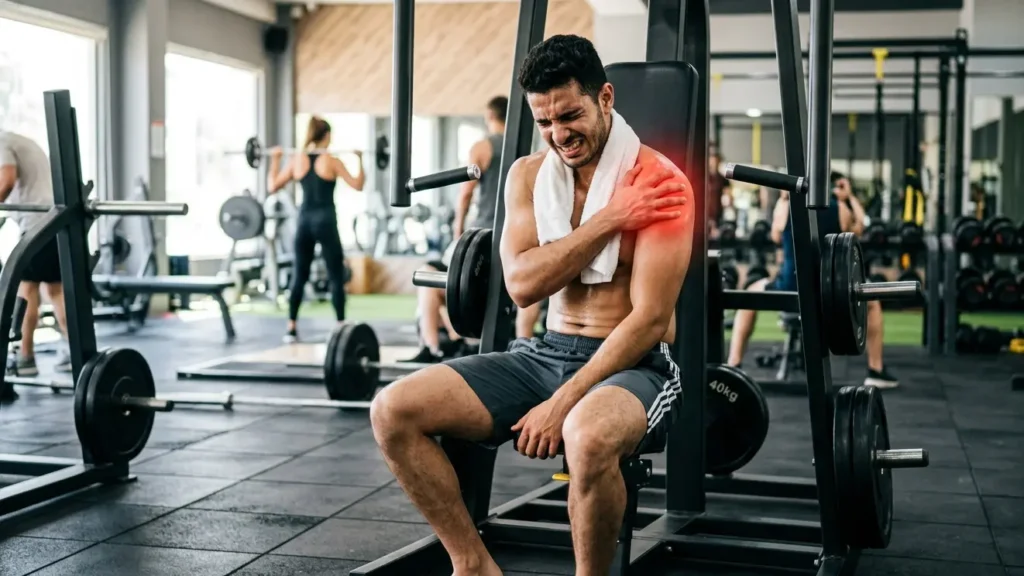
Injury Prevention and Avoidance during exercises

Before jumping into a heavy lifting routine, it is crucial to understand shoulder pain exercises to avoid. Many people inadvertently damage their joints by performing movements that cause impingement or excessive strain.

Exercises to approach with caution (or avoid if experiencing pain):

  • Behind-the-Neck Lat Pulldowns: These put the shoulder in an unnaturally vulnerable position.
  • Upright Rows: Can cause “impingement,” where tendons are pinched against bone.
  • Deep Bench Dips: These place extreme stress on the anterior (front) capsule of the shoulder.
  • Heavy Overhead Pressing with Poor Form: If you lack mobility, forcing weight overhead can lead to rotator cuff tears.

Prevention also involves listening to “crepitus”, that popping or grinding sound. While often harmless, if accompanied by pain, it is a signal to scale back and focus on stability first.

Injury Prevention during exercises

How to Strengthen Your Shoulder

A balanced strengthening program targets the rotator cuff, the scapular stabilizers, and the larger primary movers. Here is a breakdown of the essential components of a shoulder health routine.

Getting Started with Warm-Up

Never jump into strengthening exercises with “cold” muscles. A proper warm-up increases blood flow to the tendons and lubricates the joint.

  • Arm Circles: Start small and gradually increase the diameter.
  • Shoulder Rolls: Gently shrug your shoulders up, back, and down.
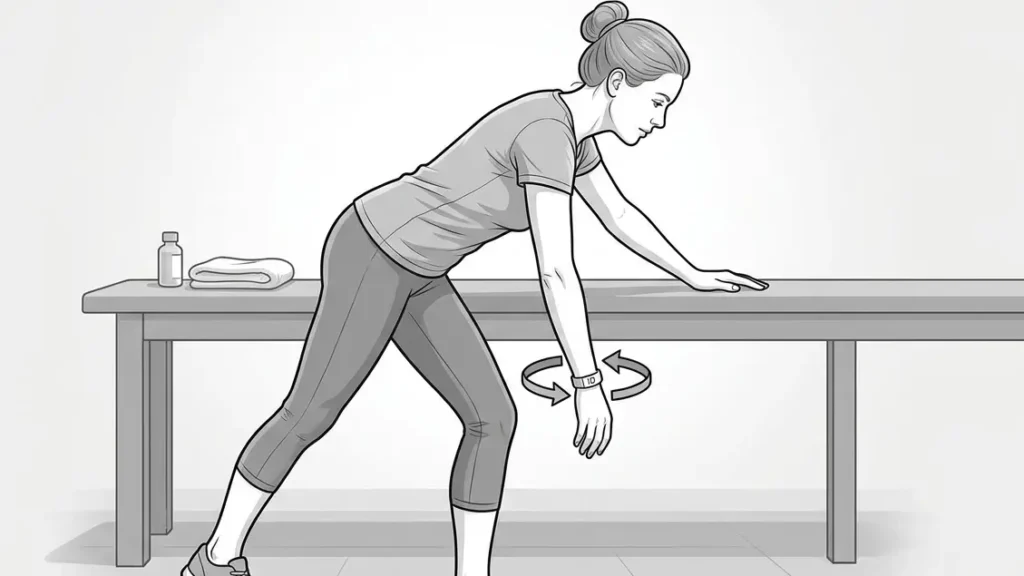
  • Pendulum Swings: Lean over a table and let your arm hang loosely, swinging it in small circles.
Pendulum Swings

Stretch Exercises

Flexibility is the partner of strength. If your chest muscles (pectorals) are too tight, they pull your shoulders forward, weakening the back muscles.

  • Doorway Stretch: Stand in a doorway, place your forearms on the frame, and lean forward gently to open the chest.
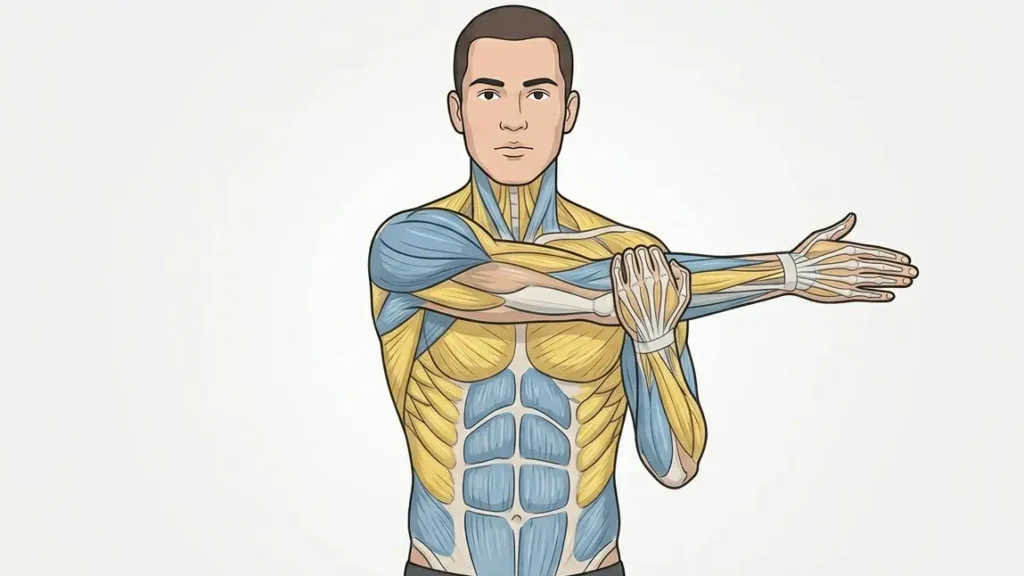
  • Cross-Body Stretch: Pull one arm across your chest to stretch the posterior capsule.
Stretch Exercises

Stability Exercises

Stability is about control. This is where you learn how to strengthen your shoulder blade muscles to create a firm base.

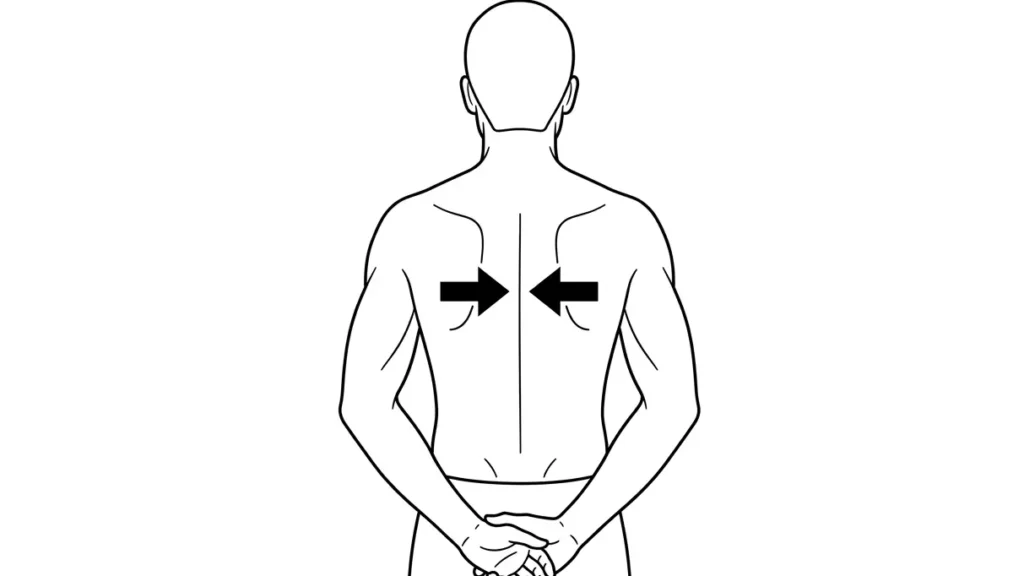
  • Scapular Squeezes: While standing or sitting, imagine trying to hold a pencil between your shoulder blades.
  • Plank Taps: While in a plank position, gently tap the opposite shoulder without letting your hips rock.
Scapular Squeezes

Rotator Cuff Exercises

This is perhaps the most critical section for anyone wondering how to strengthen your shoulder rotator cuff.

  • External Rotation (with band): Keep your elbow tucked into your side and rotate your hand away from your body.
  • Internal Rotation: The opposite motion, pulling the band toward your stomach.
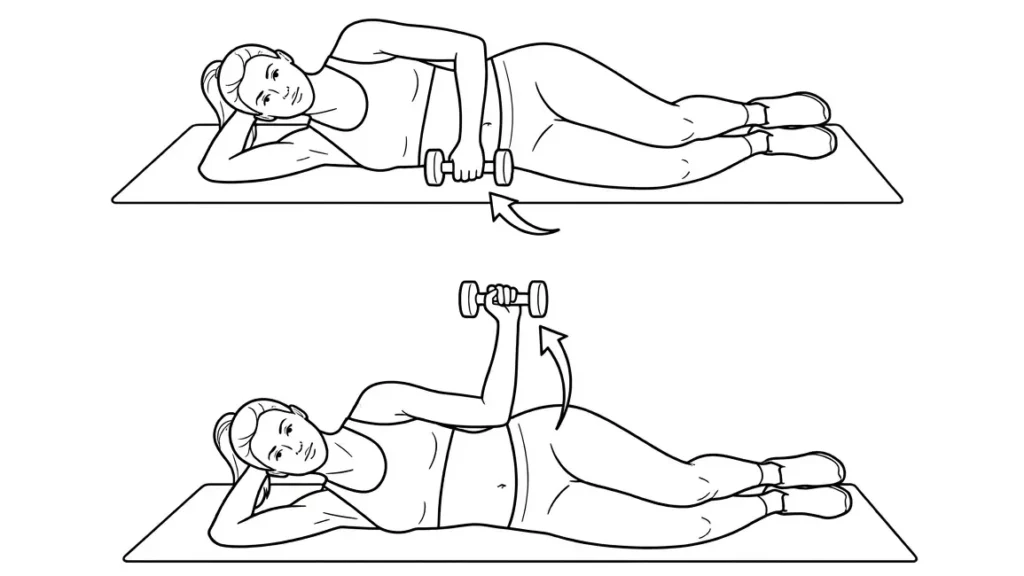
  • Side-Lying External Rotation: Using a very light dumbbell while lying on your side.
Rotator Cuff Exercises

Press-Pull Exercises

To build global strength, you need balanced “push” and “pull” movements.

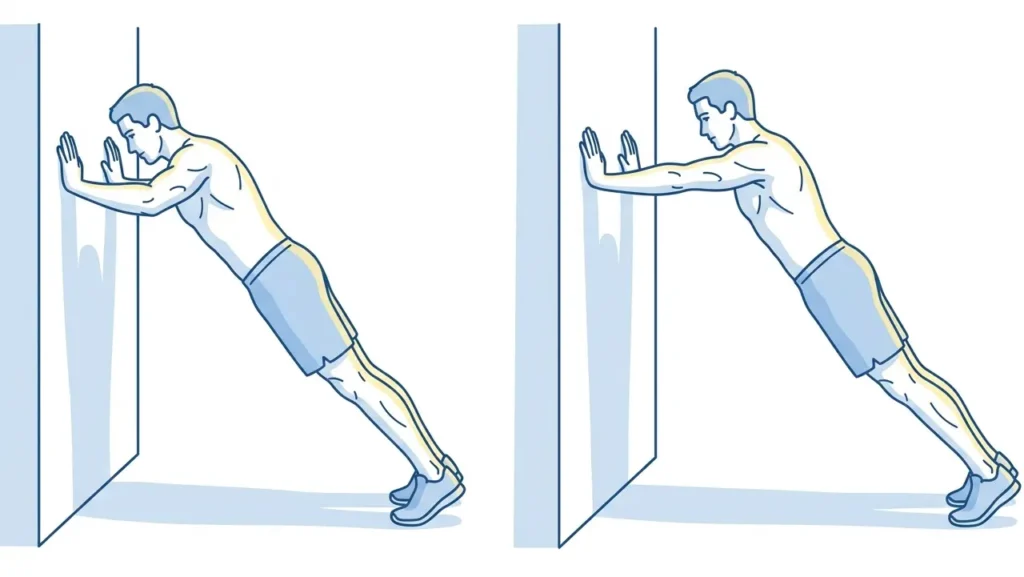
  • Wall Push-Ups: A great starting point that is easier on the joints than floor push-ups.
  • Resistance Band Rows: Focus on pulling your elbows back and squeezing the shoulder blades together.
Press-Pull Exercises

Mobility & Range of Motion Exercises

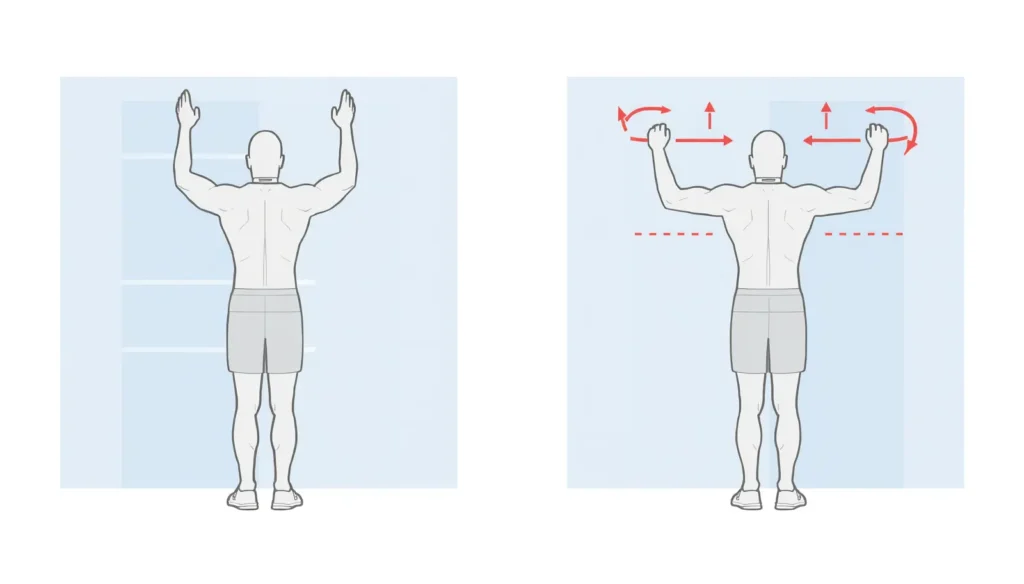
  • Wall Slides: Stand with your back against a wall and slide your arms up and down in a “Y” or “W” shape, keeping contact with the wall.
  • Stick/Broomstick Dislocations: Holding a light stick with a wide grip and moving it from your waist to behind your back (only if comfortable).
shoulder mobility exercise

Frozen Shoulder Exercise

If you suffer from stiffness or “Frozen Shoulder” (Adhesive Capsulitis), the goal is gentle, consistent movement.

  • Finger Ladder: Walk your fingers up a wall as high as you can go without sharp pain.
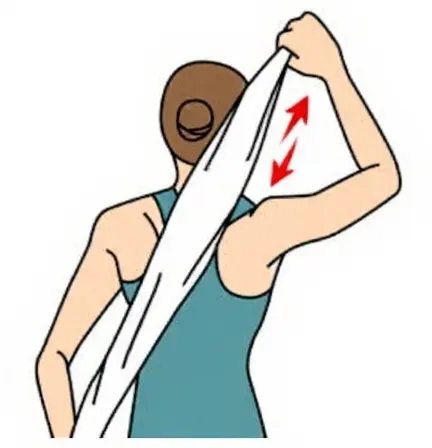
  • Towel Stretch: Use a towel behind your back to gently pull the affected arm into internal rotation.
Frozen Shoulder Exercise

How to Strengthen Your Shoulder at Home

You don’t need an expensive gym membership in Sharjah to improve your joint health. Most of these exercises can be done using:

  1. Resistance Bands: The most versatile tool for rotator cuff work.
  2. Water Bottles: Use these as light weights if you don’t have dumbbells.
  3. Wall Space: Essential for slides and push-ups.
  4. A Sturdy Chair: For seated posture and support exercises.

Consistency is key. Performing 10–15 minutes of these movements three times a week can yield significant results in stability and pain reduction.

How to Strengthen Your Shoulder After Injury

Recovering from an injury requires a phased approach. If you are looking for how to strengthen your shoulder after dislocation, the priority is stability over mobility. A dislocated shoulder has stretched ligaments, meaning the muscles must work twice as hard to keep the joint in place.

  • Isometrics: Exercises where the muscle contracts without the joint moving. Push your hand against a wall and hold for 10 seconds.
  • Proprioception: Balancing on your hands (quadruped position) to “re-teach” the brain how to stabilize the joint.
  • Slow Progression: Never rush back to heavy weights. If it hurts, stop.

Why Choosing Dr. Usama Saleh for Your Shoulder Care

When it comes to specialized orthopedic care in the UAE, Dr. Usama Saleh stands out as a leading authority. Strengthening a shoulder is often a delicate balance between physical therapy and medical intervention.

Dr. Usama Saleh provides a patient-centered approach, ensuring that your strengthening program is tailored to your specific anatomy and injury history. Whether you are dealing with a chronic rotator cuff tear or recovering from a sports injury in Sharjah, Dr. Usama Saleh utilizes advanced diagnostic tools to create a roadmap for your recovery. By choosing a specialist, you ensure that you aren’t just “exercising,” but rather following a clinical protocol designed to restore peak performance.

Read more about our shoulder treatments and what conditions we treat now.

FAQs About How to Strengthen Your Shoulder

How do you strengthen a weak shoulder?

Strengthening a weak shoulder starts with low-resistance, high-repetition exercises focusing on the rotator cuff and scapular stabilizers. Using resistance bands for internal and external rotations is the most effective starting point.

To build true strength, you must combine stability work with functional compound movements like overhead presses (with proper form), rows, and push-ups. Balance is vital, ensure you pull as much as you push.

Shoulder weakness often stems from inactivity, poor posture (leading to “rounded shoulders”), or underlying micro-tears in the rotator cuff. When the small stabilizer muscles stop firing correctly, the entire shoulder feels weak.

Crepitus (popping/grinding) can often be managed by improving joint centration. Focusing on “how to strengthen your shoulder blade muscles” helps align the joint properly, which often reduces the mechanical clicking heard during movement.

Signs of weakness include difficulty lifting your arm above your head, a “heavy” feeling in the arm, or an inability to hold a weight out to the side (lateral raise) without shrugging your neck.

The primary muscles (deltoids) are built through overhead presses, lateral raises, and front raises. However, for a healthy appearance and function, you must include rows and “face pulls” to build the rear deltoids and upper back.

Final Thoughts about how to strengthen your shoulder

Learning how to strengthen your shoulder is a journey that requires patience, the right technique, and professional guidance. By focusing on the rotator cuff, the shoulder blade stabilizers, and maintaining proper mobility, you can prevent injuries and enjoy an active lifestyle in the UAE.

If you are experiencing persistent pain or are unsure where to start with your recovery, reaching out to a professional like Dr. Usama Saleh can provide the clarity and expertise you need. Don’t wait for a minor ache to become a major limitation. Start your strengthening journey today and give your shoulders the support they deserve.

Schedule your appointment now.

Book an Appointment with Dr. Usama Saleh

Contact Form dr
Patient Connection Hub Assess your pain