Shoulder Blade Pain Treatment Dubai | Dr. Usama Saleh

← Back to All Blogs
shoulder blade pain

The human body is an incredible architecture of interconnected parts, but few areas are as complex- or as prone to frustration- as the upper back and shoulders. If you have ever felt a sharp, stabbing sensation between your wings or a dull, nagging ache that refuses to let you sleep, you know exactly how debilitating shoulder blade pain can be.

Understanding shoulder blade pain is the first step toward reclaiming your life. Whether the pain is localized or radiating, it is your body’s way of asking for help. Let’s look at why this happens and how we can find your path to relief together.

Anatomy of the Scapula: Your Shoulder’s Anchor

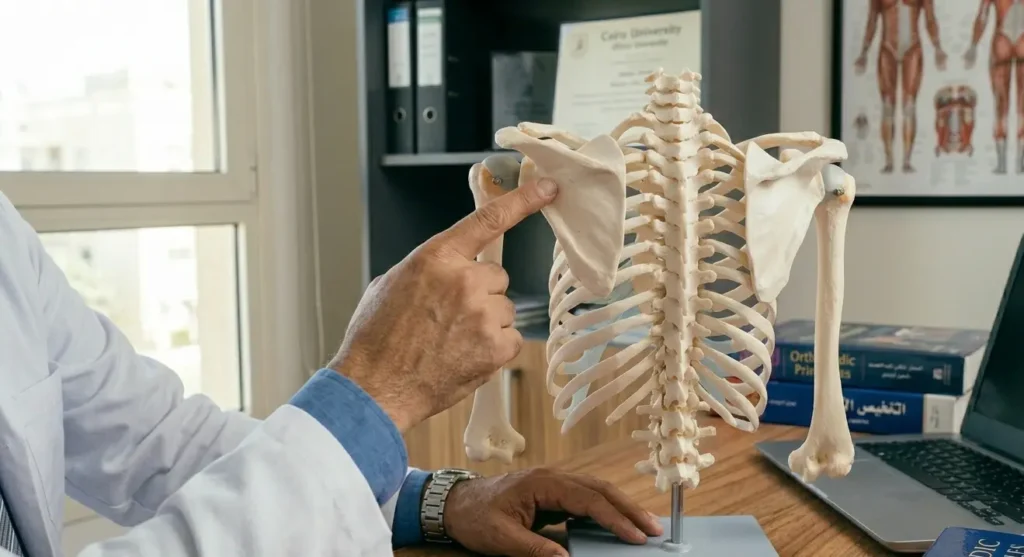
To understand why your back hurts, we must first look at the scapula, the medical term for your shoulder blade. This triangle-shaped bone is a masterpiece of stability. It acts as the anchor for your entire arm, connecting your upper arm bone (humerus) to your collarbone (clavicle).

Because the shoulder blade is so mobile, it relies heavily on a complex web of muscles and ligaments to stay in the right place. When these muscles become weak, tight, or imbalanced, the “socket” of your shoulder joint loses its alignment. This can lead to a condition called scapular dyskinesis, or what many people call a winged shoulder blade. If you feel a crunching or snapping sound when you move your arm, it’s often a sign that this delicate balance has been disrupted.

Anatomy of the Scapula

Common Causes of Shoulder Blade Pain

In my experience serving the diverse community of Dubai, I’ve found that shoulder blade pain rarely has just one cause. It is usually a combination of lifestyle factors and physical strain.

  1. The Tech-Neck and Postural Strain
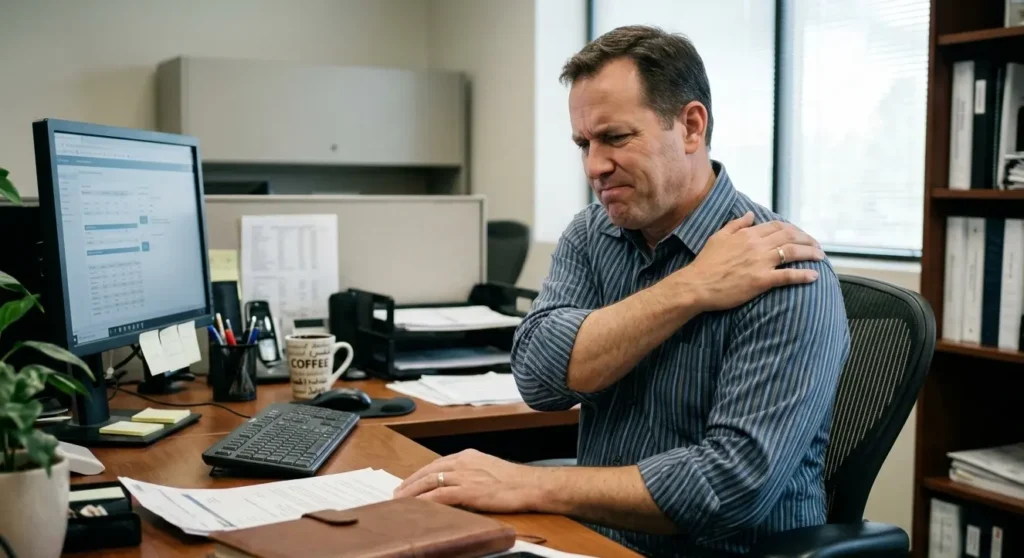
    We live in a digital age. Many of my patients spend hours hunched over laptops or looking down at smartphones. This forward-leaning posture overstretches the muscles between your shoulder blades (the rhomboids and trapezius), leading to chronic tension and burning sensations.
  2. Muscle Strains and Sports Injuries
    Dubai is a city of active people. From weekend Padel matches to intensive gym sessions, it is easy to pull a muscle. A sudden move or lifting something too heavy can cause micro-tears in the soft tissues surrounding the scapula.
  3. Referred Pain from the Neck
    Sometimes, the problem isn’t in your shoulder at all. Nerves originating in your cervical spine (neck) can send pain signals traveling down to your shoulder blade. If you feel tingling or numbness in your arm along with the back pain, the neck is often the culprit.
  4. Joint Issues: Arthritis and Rotator Cuff
    Conditions like osteoarthritis or a rotator cuff tear can change how you move your arm. To compensate for a weak shoulder joint, your back muscles work overtime, leading to deep, aching shoulder blade pain.

Identifying the Symptoms: What Does It Feel Like?

Pain is personal, and it speaks in different ways. During our consultation, I will ask you to describe exactly what you feel. Common symptoms include:

  • A Persistent Ache: A dull heaviness that feels like a weight sitting on your upper back.
  • Sharp, Stabbing Pain: Often felt during specific movements, like reaching overhead or behind your back.
  • Winging Scapula: If you look in the mirror and notice one shoulder blade poking out more than the other, your stabilizing muscles may be weak.
  • Limited Range of Motion: Difficulty lifting your arm high enough to brush your hair or reach a top shelf.
  • Popping or Grinding: A sensation that the bone is “catching” on your ribs when you rotate your shoulder.
Winging Scapula

The Diagnosis Pathway: Dr. Usama’s Compassionate Approach

I believe in listening to the body before jumping to conclusions. My diagnostic process is thorough yet gentle, designed to put you at ease while finding the root cause.

  1. The Personal Story
    We start with a conversation. I want to know about your work, your hobbies, and when the pain first started. Did it come on suddenly after a workout at the Burj Park, or has it been a slow build-over months of office work?
  2. The Physical Evaluation
    I will perform a visual observation of your back and shoulder alignment. I may use the Scapular Assistance Test (SAT), where I gently help your shoulder blade move as you lift your arm. If the pain disappears when I assist the movement, we know your muscles need strengthening.
  3. Imaging and Specialist Tests
    While many cases can be diagnosed through examination, I may order:
    • X-Rays: To rule out fractures or bone spurs.
    • MRI Scans: To look at the health of your tendons, ligaments, and nerves.
    • Nerve Conduction Studies: If I suspect a pinched nerve is causing the pain to radiate.

Treatment Options for shoulder blade pain.

The good news is that the vast majority of shoulder blade pain cases do not require surgery. As your doctor, my goal is to find the least invasive path to a full recovery.

Conservative Care (Non-Surgical)

  • Specialized Physiotherapy: This is the cornerstone of treatment. We focus on stretching tight chest muscles and strengthening the muscles that hold your shoulder blade flat against your ribcage.
  • Heat and Ice Therapy: Heat helps relax stubborn muscle knots, while ice is essential for reducing inflammation after an acute injury.
  • Medication: We may use non-steroidal anti-inflammatory drugs (NSAIDs) to manage pain while you undergo therapy.
  • Ergonomic Adjustments: We will discuss your desk setup. Sometimes, simply raising your monitor to eye level can resolve months of discomfort.

Advanced Minimally Invasive Options

If conservative care isn’t enough, we might consider:

  • Corticosteroid Injections: To calm severe inflammation in the bursa or joints.
  • Trigger Point Therapy: Targeted treatments to release “knots” in the muscle tissue.

When is Surgery Necessary?

Surgery is a last resort, reserved for cases involving significant tissue tears or bony abnormalities. If we decide surgery is the best path for your long-term health, I use modern, minimally invasive techniques to ensure your recovery is as fast and comfortable as possible.

Now you can discover our treatments, read clinets reviews, and book a consultation through our official website, usamasaleh.com

shoulder blade pain treatment

Life in Dubai: Prevention and Maintenance

Living in the UAE brings unique lifestyle factors that can affect your back. Here is how you can protect yourself:

  • The “AC” Factor: Sudden changes from the Dubai heat to freezing air-conditioned offices can cause muscles to seize. Try to keep your workstation at a comfortable, consistent temperature.
  • Hydration is Key: Your muscles and joints need water to stay elastic. In our climate, dehydration can lead to increased muscle cramping and tension.
  • Stay Active, But Be Smart: If you enjoy the local sports scene, always warm up your shoulders before activity. A few minutes of “arm circles” and “shoulder rolls” can prevent weeks of pain.

Why Choose Dr. Usama Saleh?

Choosing the right doctor is about more than just finding a specialist; it’s about finding a partner in your health. I have dedicated my career to the study of the musculoskeletal system, but my true passion is the people of Dubai.

In my clinic, we prioritize:

  • Clear Communication: I explain every diagnosis in plain language, avoiding the “medical-ese” that leaves patients confused.
  • Family Values: You are treated with the same warmth and honesty I would give to a member of my own family.
  • Comprehensive Care: We don’t just “fix the pain”; we look at your whole lifestyle to ensure the pain doesn’t come back.

Don’t choose a doctor at random!
Browse our shoulder treatments and read reviews from previous clients now on our website.

Frequently Asked Questions about shoulder blade pain

Is shoulder blade pain a sign of something serious, like a heart attack?

While most back pain is muscular, sudden and intense pain in the left shoulder blade-especially if accompanied by chest pain or shortness of breath- can be a medical emergency. If you experience these symptoms, please seek urgent care immediately.

For mild strain, the “RICE” method (Rest, Ice, Compression, Elevation) is very effective. However, if the pain lasts more than two weeks or prevents you from sleeping, it is time to see a professional for a proper assessment.

A winged scapula occurs when the muscles that hold your shoulder blade against your back (like the serratus anterior) become weak or the nerve supplying them is injured. This causes the bone to stick out like a wing. It is treatable through targeted physical therapy.

Most patients with postural or muscular shoulder blade pain see significant improvement within 4 to 6 weeks of consistent physiotherapy and lifestyle changes.

Conclusion: Let’s Get You Moving Again

You don’t have to live with the weight of pain on your shoulders. Whether you are dealing with a recent sports injury or years of desk-related tension, there is a solution that fits your life.

At the home of Dr. Usama Saleh, we are committed to getting you back to the activities you love. whether that’s a sunset walk on Jumeirah Beach or simply picking up your grandchild without fear. Your health is the foundation of your family’s happiness, and I am honored to be a part of your recovery journey.

Book Your Appointment with Dr. Usama Saleh Today

Book an Appointment with Dr. Usama Saleh

Contact Form dr
Patient Connection Hub Assess your pain