Spinal Stenosis Treatment in Dubai
Spinal stenosis and sciatica frequently overlap, both narrowing the space around spinal nerves and producing similar leg pain. Dr. Usama carefully matches your symptoms, walking pattern and MRI findings before recommending treatment.
Dr. Usama Hassan Saleh
Orthopedic, trauma and sports injury surgeon providing specialist care in Dubai.
Narrowing of the spinal canal that compresses nerves, commonly due to age-related changes.
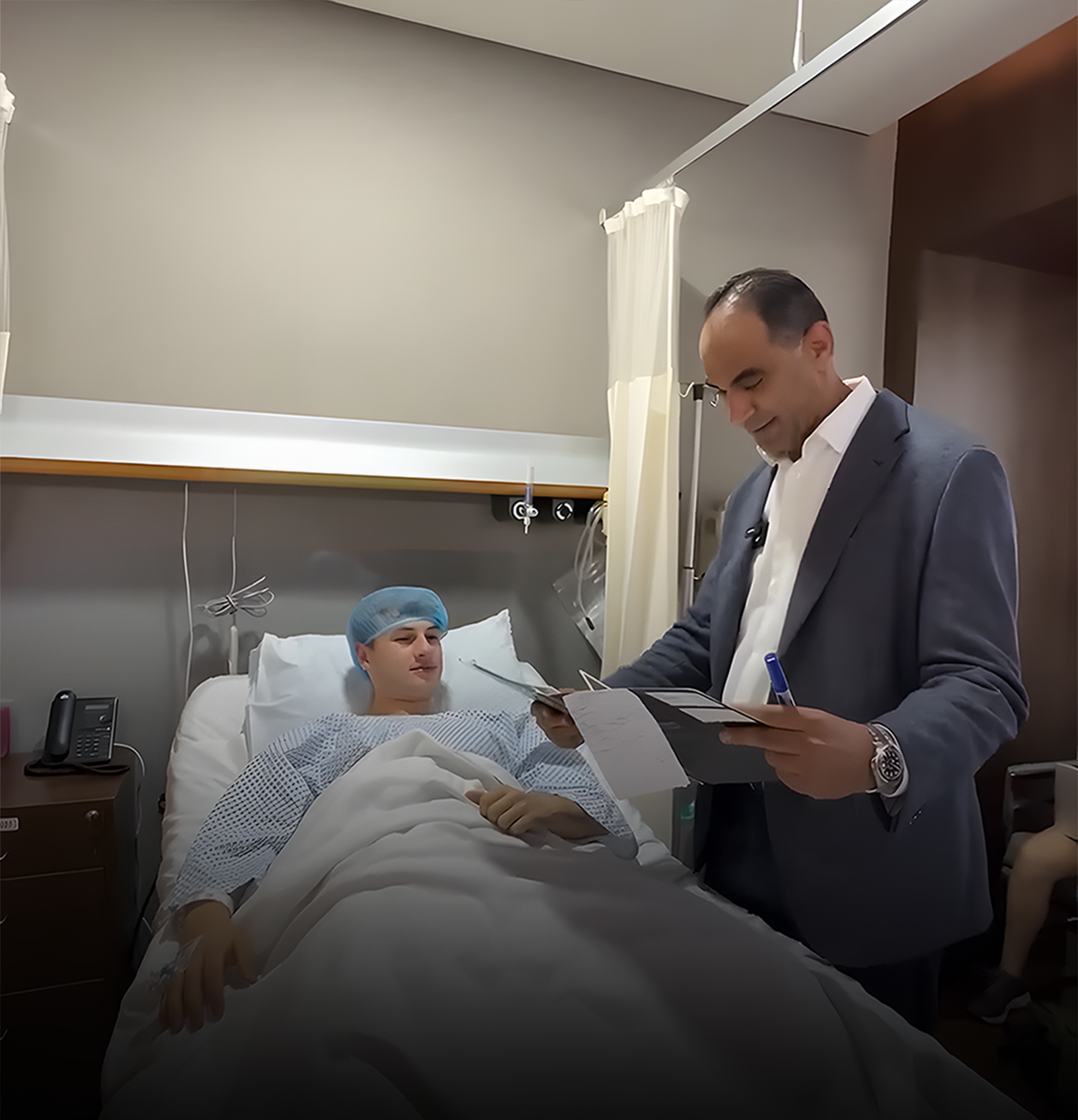
Dr. Usama Saleh, fellowship-trained orthopedic surgeon with 23 years of experience.
Medcare Orthopaedics & Spine Hospital, Sheikh Zayed Road, Dubai.
What Is Spinal Stenosis?
Spinal stenosis is a narrowing of the spinal canal—the space housing the spinal cord and nerves. Thickened ligaments, bone spurs, or bulging discs can reduce that space and compress nerve roots, creating radiating leg pain that may resemble sciatica.
Similar pain.
Different patterns.
Spinal stenosis and sciatica are not the same diagnosis, but both can involve nerve compression. They may also coexist, which makes the distribution and behaviour of your symptoms essential.
Dr. Usama combines your symptom pattern, examination and MRI—not imaging alone—to identify the primary driver.
Gradual canal narrowing
- Usually age-related and more common after 50
- Often worse with walking or standing
- Typically improves with sitting or leaning forward
- Frequently affects both legs
More sudden nerve pressure
- Often related to a disc bulge or herniation
- Can affect patients at different ages
- May worsen with sitting
- Typically follows one leg
Symptoms of Spinal Stenosis
The most distinctive pattern is called neurogenic claudication: symptoms increase with standing or walking and settle when the spine is gently flexed.
Leg pain or cramping
Discomfort that builds while walking or standing for longer periods.
Numbness or tingling
Altered sensation that may follow a specific compressed nerve pattern.
Weakness or heaviness
Legs may feel less reliable as walking distance increases.
Relief with flexion
Sitting down or leaning forward can temporarily open the narrowed canal.
Lower back pain
Back discomfort may occur, although leg symptoms are often more prominent.
Causes & Risk Factors
Most narrowing develops gradually as several age-related changes accumulate around the spinal canal.
Age-related degeneration
Changes in spinal discs and facet joints can reduce space available for the nerves over time.
Thickened ligaments
Ligaments inside the canal may enlarge and crowd the nerve structures.
Bone spurs
Osteoarthritis can produce new bone around joints and narrow the canal.
Congenital narrowing
Some patients are born with a naturally smaller spinal canal.
Finding the True Pain Driver
Accurate diagnosis at your consultation is essential before selecting a treatment path—especially when stenosis and sciatica overlap.
Clinical examination
Walking tolerance, strength, sensation, balance and symptom change with posture.
MRI assessment
The gold standard for visualising canal narrowing, disc changes and nerve compression.
X-ray review
Identifies bone spurs, alignment issues and structural changes contributing to narrowing.
Differential diagnosis
Compares walking-related and sitting-related patterns to distinguish stenosis from sciatica.
A Cinematic Recovery Journey
Recovery is progressive. The exact timeline varies by treatment type, symptom severity and individual clinical factors.
Healing happens in phases — not in one moment.
Most patients recover step by step. Walking tolerance, comfort and movement usually improve in stages, with your treatment type shaping how quickly activity returns.
Settle & protect
Initial recovery, activity modification and pain management.
Build tolerance
Progressive physiotherapy and a gradual increase in walking.
Return with confidence
Continued surgical improvement or fuller activity after conservative care.
Recovery also differs by treatment type.
Variable recovery pace
Light activity is ongoing and full improvement varies according to severity and response to treatment.
Shorter return window
Light activity often resumes in 1–2 days, with fuller activity commonly reached in 2–4 weeks.
Structured surgical recovery
Light activity often returns in 2–4 weeks, while fuller recovery may take 8–12 weeks.
When Should You See a Doctor?
These symptom patterns often suggest clinically meaningful nerve compression and should not be ignored, especially when they are progressive or limiting daily function.
Walking distance is progressively shortening
Leg pain, cramping or heaviness that limits how far you can walk is an important sign that compression may be worsening.
Symptoms improve when you sit or lean forward
This posture-linked relief pattern is classically associated with spinal stenosis and helps distinguish it from other causes of leg pain.
Leg weakness is affecting balance
If weakness is changing how you walk, increasing instability, or raising the risk of falls, medical evaluation should not be delayed.
Loss of bladder or bowel control requires immediate emergency evaluation.
This pattern may suggest severe nerve compromise and should be treated as urgent.
Spinal Stenosis Exercises
Flexion-based movement can temporarily open the narrowed canal. Your programme should still be tailored to your diagnosis and ability.
Use movements that feel more supported, more controlled, and easier to tolerate.
In many patients, flexion-biased positions reduce irritation better than prolonged upright extension or repeated backward bending.
Knee-to-chest stretch
While lying down, gently draw one or both knees toward the chest. Hold for 20–30 seconds without forcing.
Seated forward bend
While seated, lean forward gently with control and hold briefly if the position relieves symptoms.
Stationary cycling
The flexed cycling posture is often better tolerated than prolonged upright walking.
Core stabilisation
Gentle activation of deep core muscles may support the lower spine during everyday movement.
Exercises to avoid
Prolonged standing or walking without rest breaks, and repeated extension or backward bending that narrows the canal further.
Preparing for Care at Medcare MOSH
A simple sequence helps you arrive informed and ready for the treatment path selected with your surgeon.
Plan your consultation →Bring available MRI scans for review of narrowing, nerve compression and sciatica overlap.
Discuss blood-thinning medication with your care team and arrange transport home.
Complete pre-operative clearance and review the exact decompression approach.
Plan rest breaks and arrange a supportive walking aid if clinically recommended.
How Decompression Is Performed
A controlled pathway from imaging review through follow-up.
01
15–20 min
Planning
Assessment & imaging review
MRI findings are compared with walking tolerance and symptom behaviour.
Symptoms and imaging are reviewed together before any operative plan is made.
02
First
Before surgery
Conservative trial
Conservative trial
Physiotherapy and selected injections are usually considered before surgery.
Non-surgical care remains the first choice unless symptoms or neurological findings require escalation.
03
60–90 min
Core procedure
Laminectomy
Laminectomy
Bone contributing to narrowing is removed to decompress the spinal canal.
The central goal is to create more room around the compressed nerves.
04
In theatre
Safety check
Stability assessment
The decompressed spine is checked to confirm adequate space and stability.
Decompression is reviewed before the procedure is completed.
05
1–2 nights
Early recovery
Recovery room & stay
Patients receive early movement and clear activity guidance before discharge.
Walking and activity guidance begin early to support a controlled recovery.
06
2–4 weeks
Review
Follow-up
Follow-up
Walking tolerance, healing and rehabilitation progress are reassessed.
Recovery is reviewed against walking, healing and rehabilitation milestones.Risks & Expected Outcomes
Every intervention has trade-offs. Your individual expected result depends on symptom duration, severity, general health and the exact source of nerve compression.
Reported range: 50–60% meaningful improvement in walking tolerance.
Reported range: 50–70% temporary relief, often lasting several months.
Reported range: 80–90% significant improvement in leg pain and walking distance.
What If Spinal Stenosis Is Left Untreated?
Progression differs between patients, but ongoing nerve compression can gradually reduce function and independence.
Progressive walking limitation
Walking tolerance may shorten over time as degenerative narrowing continues.
Increased fall risk
Leg weakness and balance difficulty can make everyday mobility less safe.
Permanent nerve damage
Rare but serious prolonged compression can leave weakness or numbness that may not fully reverse.
Your Recovery Timeline
Recovery is progressive. The exact timeline varies by treatment and individual clinical factors.
Settle & protect
Initial recovery, activity modification and pain management.
Build tolerance
Progressive physiotherapy and a gradual increase in walking.
Return with confidence
Continued surgical improvement or fuller activity after conservative care.
When Surgical Opinion is Required
Some advanced spine or hip cases may need surgical care. Dr. Usama collaborates with leading UAE surgeons to ensure you get referred with confidence—only when necessary.
Common Questions About
No, spinal stenosis and sciatica are different conditions that can produce similar leg pain. Spinal stenosis is a gradual narrowing of the spinal canal, typically age-related, while sciatica most often comes from a herniated disc compressing a single nerve root. The two can also occur together.
Spinal stenosis typically causes leg pain, cramping, or heaviness that worsens with walking or standing and improves with sitting or leaning forward, a pattern called neurogenic claudication. This differs from sciatica, which often worsens with sitting.
Yes, many spinal stenosis cases respond well to physiotherapy, activity modification, and epidural injections. Surgery is reserved for cases where walking tolerance is significantly and progressively limited despite genuine conservative treatment.
Flexion-based exercises, gently bending the spine forward, such as knee-to-chest stretches and stationary cycling, tend to relieve spinal stenosis symptoms by temporarily opening the narrowed canal. Extension-based exercises, like backward bending, should generally be avoided.
Laminectomy for spinal stenosis has a strong track record, with 80 to 90% of appropriately selected patients experiencing significant improvement in leg pain and walking distance. Dr. Usama discusses your specific expected outcome based on imaging and symptom severity.
Most UAE insurance plans, including Daman, DHA, Cigna, AXA, Bupa, MetLife, GlobeMed, NAS, and NextCare, cover medically necessary spinal stenosis treatment, from physiotherapy through surgery. Dr. Usama's team at Medcare MOSH verifies your coverage before any treatment plan begins.
Experience with a Conservative-First Philosophy
Dubai patients choose Dr. Usama for careful differentiation between spinal stenosis and sciatica before treatment begins.
Long-Standing Experience Across Dubai
Experience with spine conditions across Dubai's diverse population, supported by careful clinical assessment before treatment.
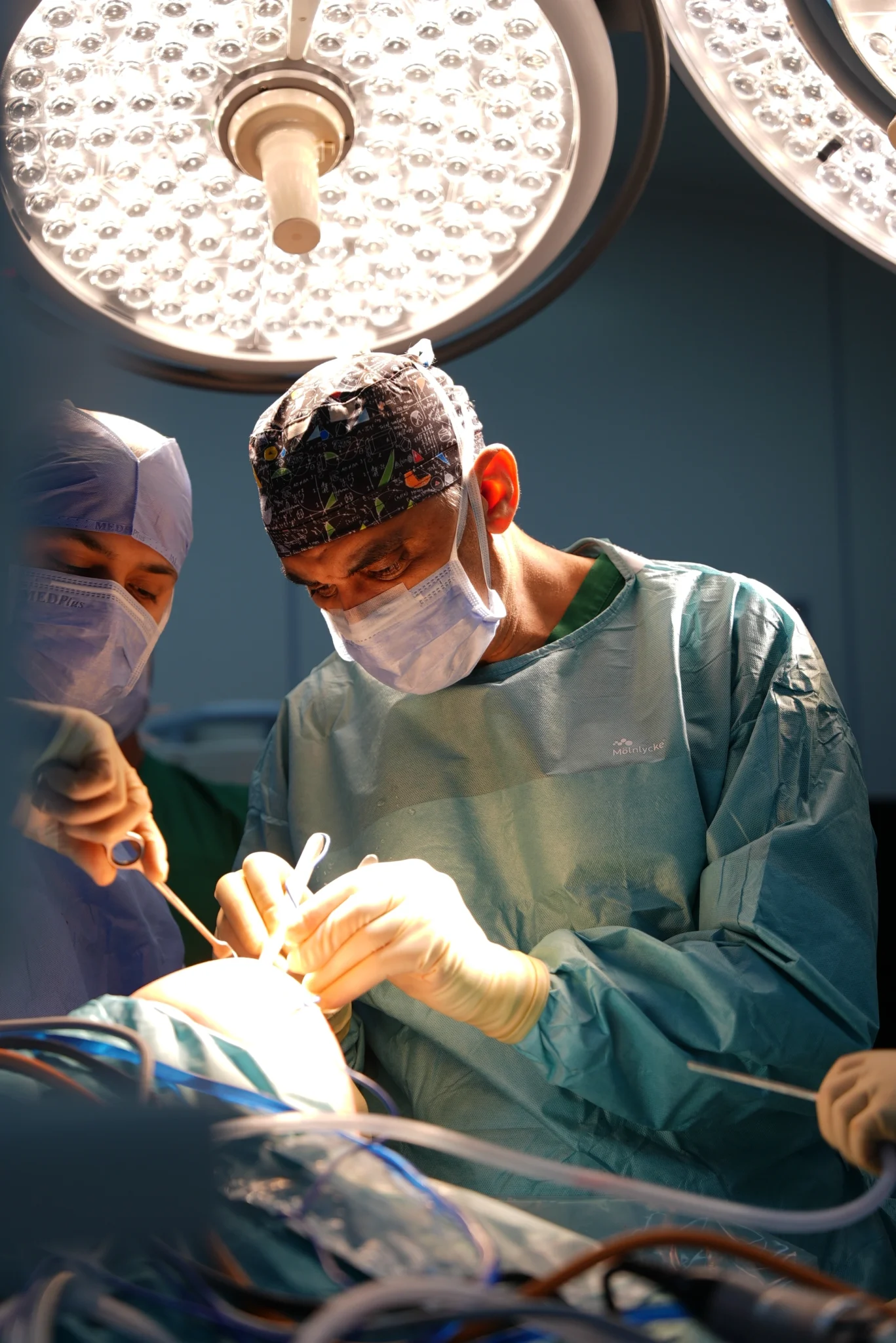
Fellowship-Trained Orthopedic Surgeon
Advanced orthopedic training at the University of Toronto.
01Stenosis vs Sciatica Clarity
A focused differential diagnosis when symptom patterns overlap.
02
Surgery Only When Justified
Conservative management is considered before operative treatment.
Long-Standing UAE Experience
Long-standing experience with spine conditions across the UAE population.
Spine Care on Sheikh Zayed Road
Conveniently located at Medcare Orthopaedics and Spine Hospital for patients from Dubai, Sharjah and across the UAE.
Medcare MOSH
Sheikh Zayed Road
Dubai, United Arab Emirates
Related Conditions & Treatments
Explore the wider hip, back and spine pathway or compare conditions that may produce similar symptoms.
Hip, Back & Spine Pain
Overview of related conditions and treatment pathways.
Herniated Discs & Sciatica
For nerve pain driven primarily by a herniated disc.
Hip Impingement & Bursitis
Hip-specific pain that can sometimes mimic spinal symptoms.
Biological Repair
PRP and regenerative options for selected soft-tissue conditions.
Take control of your health, mobility, and quality of life.
Your First Step Toward a Stronger Tomorrow Starts Now:
Book your personal consultation with Dr. Usama Saleh today and begin your journey to a better you.
Thank you — your message was sent.