
Peptides for Muscle Growth: Clinical Truth, Risks & Real Outcomes
Using peptides for muscle growth attracts gym-goers seeking lean body mass without classic steroid side effects. However, clinical sports medicine reveals an...

Using peptides for muscle growth attracts gym-goers seeking lean body mass without classic steroid side effects. However, clinical sports medicine reveals an important gap between marketing claims and true physiological muscle gains.
Key Takeaways
- Growth hormone secretagogues increase systemic growth hormone (GH) and insulin-like growth factor 1 (IGF-1), but primarily promote extracellular fluid retention and collagen synthesis rather than direct myofibrillar protein synthesis.
- Clinical trials demonstrate that while lean body mass numbers rise on body composition scans, actual skeletal muscle strength and contractile fiber cross-sectional area rarely increase in healthy individuals.
- Signaling peptides such as BPC-157 and TB-500 support soft-tissue remodeling and angiogenic healing in preclinical rodent models, but lack robust, randomized human trials for athletic hypertrophy.
- Unregulated research peptides pose health hazards, including insulin resistance, dysglycemia, oncogenic cellular proliferation risks, and product contamination with heavy metals and endotoxins.
- The World Anti-Doping Agency (WADA) strictly prohibits growth hormone secretagogues and experimental peptide fragments at all times under S2 and S0 categories.
What Are Peptides for Muscle Growth?
Peptides are short chains of amino acids linked together by peptide bonds, typically containing fewer than fifty amino acid units.
In human physiology, peptides serve as targeted signaling molecules, communicating with cellular surface receptors to modulate endogenous hormone secretion, tissue repair, enzymatic activity, and metabolic regulation.
When wellness clinics market peptides for muscle growth, they generally promote synthetic analogues designed to stimulate the hypothalamic-pituitary-somatotropic axis.
These compounds trigger the pituitary gland to pulse higher concentrations of human growth hormone into the bloodstream, stimulating hepatic production of IGF-1.
Unlike exogenous anabolic-androgenic steroids that bind directly to intracellular androgen receptors to accelerate transcription of muscle protein, signaling peptides rely entirely on downstream endocrine cascades.
These downstream pathways primarily stimulate connective tissue fibroblast activity, water balance, and lipid breakdown rather than direct sarcomeric protein accretion.
Hypertrophy Reality: Do Peptides Build Contractile Muscle Mass or Water?
Athletes frequently confuse increases in scale weight or lean mass with genuine skeletal muscle hypertrophy.
To evaluate whether a compound builds functional muscle, clinicians distinguish between two distinct forms of mass accretion:
- Myofibrillar Hypertrophy: An expansion of actin and myosin contractile protein filaments within skeletal myocytes, generating measurable increases in physical force production and structural muscle density.
- Extracellular and Sarcoplasmic Fluid Retention: An accumulation of intracellular and interstitial water, driven by growth hormone’s stimulation of sodium retention through the renin-angiotensin-aldosterone axis.
Elevated growth hormone levels increase systemic collagen turnover within tendons, fascial sheaths, and intramuscular connective tissue, as outlined in endocrinology reviews on bioactive peptides in PubMed Central.
However, growth hormone does not directly stimulate the mammalian target of rapamycin (mTORC1) pathway in mature skeletal myocytes without mechanical loading and essential amino acid availability.
Consequently, the lean body mass increases recorded on dual-energy X-ray absorptiometry (DEXA) scans during peptide trials largely reflect fluid retention and extracellular matrix remodeling, not functional, contractile muscle tissue.
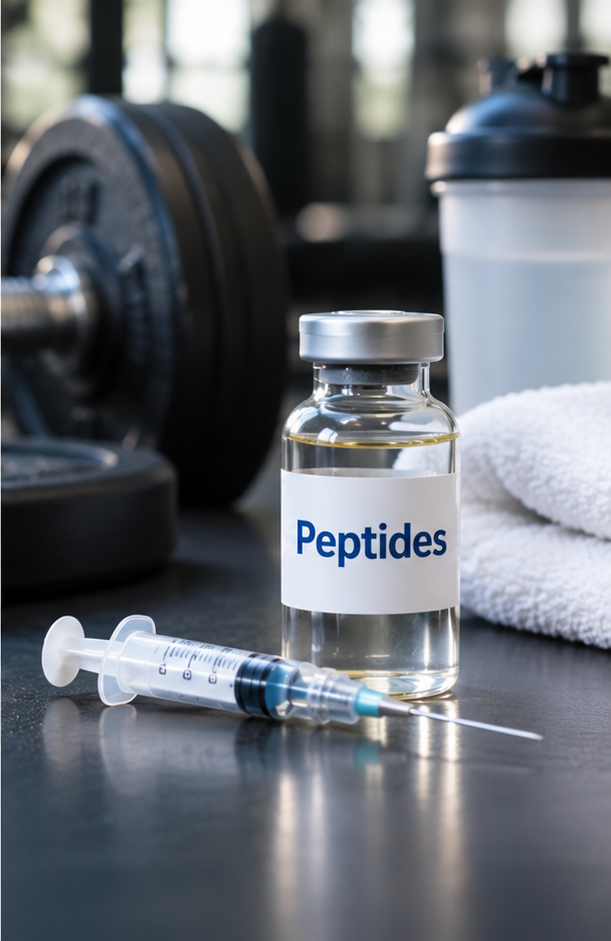
Classification of Peptides Promoted in Bodybuilding
Not all peptides operate through the same biochemical pathways or carry identical clinical risks.
Compounds discussed in fitness and clinical settings fall into four distinct pharmacological categories:
| Category | Primary Mechanism | Common Examples | Clinical Application |
|---|---|---|---|
| Dietary & Bioactive Peptides | Provide whole amino acid building blocks and bioactive fragments via gastrointestinal absorption. | Collagen hydrolysate, whey dipeptides, creatine precursors | Nutritional support for joint health, tendon remodeling, and overall protein synthesis. |
| GHRH Analogues | Bind to pituitary growth hormone-releasing hormone receptors to amplify natural pulse amplitude. | CJC-1295, Sermorelin, Tesamorelin | Prescription management of adult growth hormone deficiency and visceral HIV-associated lipodystrophy. |
| GHRPs & Ghrelin Agonists | Stimulate the growth hormone secretagogue receptor (GHS-R1a) to induce pulsatile pituitary GH release. | Ipamorelin, GHRP-2, GHRP-6, MK-677 (Ibutamoren) | Investigational agents for medical wasting states, cachexia, and post-operative recovery. |
| Tissue Repair Fragments | Promote focal angiogenesis, fibroblast migration, and downregulate inflammatory cytokines. | BPC-157 (Body Protection Compound), TB-500 (Thymosin Beta-4 fragment) | Preclinical experimental research for tendon-to-bone integration and soft-tissue injury models. |
The Major Peptides Analyzed: Clinical Evidence vs. Hype
Commercial marketing often groups all peptide therapies under an unproven claim of substantial muscular hypertrophy.
Evaluating individual compounds against peer-reviewed clinical research demonstrates their actual biological capabilities and limitations.
CJC-1295 and Ipamorelin: The Synergy Myth
CJC-1295 is a synthetic tetrasubstituted peptide analogue of growth hormone-releasing hormone, whereas Ipamorelin is a selective pentapeptide ghrelin receptor agonist.
Clinics frequently prescribe this pair as a popular peptide stack for muscle growth, aiming to trigger simultaneous pituitary receptor stimulation.
While this combination substantially elevates serum GH and circulating IGF-1, clinical human trials do not show significant increases in maximal muscle strength or athletic power.
Patients typically experience joint tightness, transient subcutaneous edema, and peripheral tingling from nerve compression rather than genuine myofibrillar hypertrophy.
Sermorelin Muscle Mass Outcomes
Sermorelin consists of the first 29 amino acids of endogenous human growth hormone-releasing hormone.
Developed to assess pituitary reserve and treat growth hormone deficiencies in pediatric patients, Sermorelin exhibits a brief biological half-life of roughly ten minutes.
Human trials among elderly cohorts demonstrate minor improvements in body composition, but these changes are driven by increased lipolysis and fluid balance rather than accelerated muscle accretion.
Tesamorelin for Body Composition
Tesamorelin is a stabilized synthetic growth hormone-releasing factor analogue approved by the U.S. Food and Drug Administration specifically to reduce excess visceral abdominal fat in patients with HIV-associated lipodystrophy.
Clinical data confirms substantial reductions in deep visceral adipose tissue and modest increases in lean mass readings.
However, randomized trials indicate that functional quadriceps strength does not improve, confirming that changes in DEXA lean body mass represent extracellular fluid and nitrogen retention rather than contractile fibers.
MK-677 (Ibutamoren): Oral Secretagogue Complexities
Although frequently marketed alongside peptides, MK-677 is an orally active, non-peptide spiroindoline that mimics the endogenous hunger hormone ghrelin.
MK-677 strongly stimulates appetite and elevates basal GH and IGF-1 levels for sustained periods.
However, chronic activation of the ghrelin receptor system often triggers marked insulin resistance, elevated fasting blood glucose, and persistent fluid accumulation, making it unsuitable for healthy athletic development.
BPC-157 Muscle Repair and Tissue Regeneration
Derived from human gastric juice proteins, BPC-157 is widely discussed on fitness forums for muscle tears and joint pain.
The compound accelerates vascular endothelial growth factor (VEGF) transcription, which stimulates collateral capillary formation in injured animal tendons.
However, there are no randomized, placebo-controlled clinical trials evaluating BPC-157 for skeletal muscle hypertrophy or tendon healing in human athletes.
Research Status of Investigational Peptides for Muscle Growth
When reviewing experimental peptides for muscle growth, clinicians note that current medical consensus requires reproducible, peer-reviewed human validation before endorsing therapeutic utility.
Most commercially promoted growth hormone releasing peptides lack large-scale phase III human trials that measure physical power or athletic output.
Consequently, relying on off-label secretagogue regimens for training adaptations introduces unquantified medical variables without proven hypertrophy advantages.
Connective Tissue Repair vs. Muscle Growth: An Orthopedic Perspective
In orthopedic sports injury surgery, we treat the human musculoskeletal apparatus as an interconnected mechanical chain composed of contractile muscle bellies, myotendinous junctions, dense fibrous tendons, and bone anchorages.
Growth hormone and IGF-1 signaling exert their most pronounced biochemical effects on connective tissue fibroblasts, not the contractile proteins inside muscle fibers.
For individuals struggling with structural joint damage, true clinical improvement requires targeted mechanical interventions rather than reliance on experimental peptide compounds.
Athletes managing joint degeneration, structural instability, or chronic tendinopathy often turn to unverified injectables instead of addressing underlying mechanical pathology.
When athletes experience deep joint pain during heavy lifting, structural pathology is often the underlying issue.
Issues like rotator cuff tear treatment Dubai or ACL and meniscus tears treatment require formal clinical imaging and orthopedic management rather than unapproved chemical signaling.
Non-surgical joint preservation strategies, such as evidence-based knee injections and targeted rehabilitation protocols, consistently outperform systemic research peptides for resolving chronic joint inflammation.
Similarly, when chronic overuse damages tendon collagen, structured protocols for chronic tendonitis and overuse injuries facilitate true cellular remodeling through progressive mechanical loading.
No systemic peptide therapy can mechanically re-anchor a detached tendon, stabilize an unstable joint capsule, or replace lost articular cartilage.
Clinical Risks, Endocrine Perturbations, and Adverse Side Effects
Marketing narratives often promote synthetic peptides as side-effect-free alternatives to anabolic steroids.
In clinical reality, manipulating growth hormone and metabolic receptors carries clear physiological risks, as highlighted by Harvard Health Publishing.
Systemic peptide administration introduces notable endocrine, cardiovascular, and oncologic considerations:
- Glycemic Dysregulation and Insulin Resistance: Growth hormone acts as an insulin-antagonistic counter-regulatory hormone. Chronic elevation inhibits peripheral glucose uptake into skeletal muscle and increases hepatic gluconeogenesis, elevating fasting blood glucose and HbA1c levels.
- Fluid Retention and Nerve Entrapment: Sustained sodium retention expands extracellular fluid volume, frequently triggering peripheral edema and bilateral carpal tunnel syndrome due to median nerve compression.
- Proliferative and Oncogenic Concerns: IGF-1 acts as a potent mitogen that inhibits cellular apoptosis. While IGF-1 does not initiate genetic mutations directly, chronically elevated levels can accelerate the proliferation of pre-existing, undiagnosed neoplastic cells.
- Product Contamination Hazards: Unregulated research chemicals purchased online regularly fail sterility and purity standards, exposing consumers to bacterial endotoxins, heavy metals, and incorrect molecular dosages, as cautioned in consumer safety alerts from the U.S. Food and Drug Administration.
Legal Status, Compounding Restrictions, and WADA Anti-Doping Regulations
The regulatory and anti-doping context surrounding performance-enhancing peptides has tightened substantially across medical and sports organizations.
Athletes, fitness professionals, and clinical patients must navigate several strict legal and competitive boundaries:
WADA Anti-Doping Classifications
The World Anti-Doping Agency Prohibited List places growth hormone secretagogues (including CJC-1295, Ipamorelin, and Sermorelin) under Section S2: Peptide Hormones, Growth Factors, Related Substances, and Mimetics.
These compounds are prohibited at all times, both in-competition and out-of-competition.
Furthermore, experimental repair fragments such as BPC-157 and TB-500 fall under Section S0 (Non-Approved Substances), carrying multi-year competition bans for competitive athletes who test positive.
Pharmacy Compounding Restrictions
Regulatory authorities have placed numerous bulk peptide substances on restricted compounding lists due to safety concerns, immunogenicity risks, and a lack of approved therapeutic indications.
Legitimate medical compounding is restricted to verified clinical conditions, making over-the-counter or online non-prescription distribution illegal in major healthcare jurisdictions.
Evidence-Based Fundamentals: What Actually Drives Skeletal Muscle Hypertrophy
Skeletal muscle protein accretion is governed by mechanical, nutritional, and metabolic signaling pathways that cannot be replaced by secretagogue injections.
Athletes seeking genuine muscular development achieve superior, long-term results by optimizing foundational physiological stimuli:
- Progressive Mechanical Tension: Systematically overloading muscle fibers through structured resistance training recruits high-threshold motor units, activating intracellular mechanosensors that initiate the mTORC1 cascade.
- Optimal Amino Acid Availability: Consuming 1.6 to 2.2 grams of high-quality protein per kilogram of body weight daily ensures sustained hyperaminoacidemia and delivers the leucine threshold required to maximize muscle protein synthesis.
- Caloric Sufficiency: Maintaining a slight energy surplus provides the biochemical energy necessary to synthesize new myofibrillar proteins while supporting baseline endocrine health.
- Restorative Sleep: Obtaining seven to nine hours of quality sleep supports natural pulsatile pituitary hormone release, central nervous system recovery, and peripheral tissue remodeling.
- Targeted Injury Management: Addressing biomechanical deficiencies, movement asymmetry, and acute joint damage through proper medical rehabilitation protects joint structures without risking endocrine disruption.
Frequently Asked Questions About Peptides for Muscle Growth
What is the best peptide to build muscle?
There is no peptide approved or clinically demonstrated to directly induce skeletal muscle hypertrophy in healthy individuals. In practice, patients should confirm the diagnosis, review benefits and risks, understand follow-up needs, and ask when specialist medical advice is required.
While compounds like CJC-1295 paired with Ipamorelin improve circulating growth hormone and IGF-1, this hormonal increase primarily enhances fluid retention and collagen turnover rather than adding contractile muscle tissue.
Do peptides actually build muscle or just cause water retention?
Most lean body mass gains measured during growth hormone secretagogue protocols stem from extracellular and intracellular fluid retention. Patients should ask which findings support the recommendation, what alternatives exist, and what warning signs require prompt medical review.
Elevated growth hormone prompts sodium reabsorption in the kidneys, leading to tissue fluid accumulation that registers as lean mass on standard body composition scans without increasing functional strength.
What are the risks of taking peptides for muscle growth?
Risks include peripheral insulin resistance, elevated blood glucose, carpal tunnel syndrome, joint pain from fluid expansion, and unknown long-term cellular proliferation concerns. A clinician can help compare options, safety factors, expected outcomes, and the follow-up plan before any treatment decision is made.
Furthermore, unapproved substances obtained from research websites carry a high risk of bacterial endotoxin contamination, structural impurities, and inaccurate dosing.
How long does it take for peptides to work?
Fluid retention and appetite stimulation can manifest within several days of initiating growth hormone secretagogues. In practice, patients should confirm the diagnosis, review benefits and risks, understand follow-up needs, and ask when specialist medical advice is required.
However, measurable changes in tendon collagen synthesis require three to six months of consistent progressive loading, and genuine myofibrillar hypertrophy will not occur without an accompanying progressive resistance training stimulus.
Are peptides legal for athletes and gym-goers?
For competitive athletes, virtually all performance peptides and secretagogues are strictly prohibited under WADA S2 and S0 classifications. Patients should ask which findings support the recommendation, what alternatives exist, and what warning signs require prompt medical review.
For recreational gym-goers, sourcing these compounds without a prescription through research supply stores operates in an unregulated gray market, carrying substantial legal, quality-control, and medical safety risks.
Resources and Further Reading
For additional clinical guidance on sports injury recovery and joint health, explore our related clinical resources:
- Top 5 Sports Injuries and Prevention
- Chronic Tendonitis and Overuse Management
- Evidence-Based Knee Injections
Grounding Sources
- [1] Regulation of muscle mass by growth hormone and IGF-I
- [2] Growth Hormone Secretagogues and the Regulation of Calcium Signaling in Muscle
- [3] The effect of specific bioactive collagen peptides on function and muscle remodeling during human resistance training
- [4] 6 Things to Know About Peptide Hormones and Releasing Factors | USADA
Conclusion
Using peptides for muscle growth remains heavily influenced by marketing narratives that overstate the anabolic power of growth hormone secretagogues. While these compounds increase systemic GH and IGF-1 secretion, clinical evidence shows their effects center on fluid balance, connective tissue collagen remodeling, and lipolysis rather than direct contractile muscle accretion. Achieving real, functional muscular development requires consistent progressive resistance training, adequate dietary protein, and proper orthopedic recovery strategies.
Ready to Take the Next Step?
If persistent joint pain, shoulder instability, or knee discomfort limits your training, skip unverified peptides for muscle growth and seek an accurate clinical assessment. Dr. Usama Saleh, a fellowship-trained orthopedic and sports injury surgeon in Dubai, provides comprehensive evaluation and advanced treatment plans tailored to active adults and competitive athletes. To protect your joint longevity and restore peak physical movement, contact Dr. Usama Saleh to arrange an in-person or online consultation.


