Knee injuries can be incredibly disruptive, especially in a vibrant city like Sharjah or Dubai, where maintaining an active lifestyle is often a priority. If you have recently experienced a sharp pain on the inner side of your knee after a sudden twist or impact, you might be dealing with a medial collateral ligament injury. Understanding mcl tear symptoms is the first step toward getting back on your feet and reclaiming your mobility.
In this guide, we will explore everything from identifying the early signs of a tear to the most advanced treatment options available in the UAE.
What is the MCL Ligament?
The MCL ligament, or medial collateral ligament, is a sturdy band of tissue located on the inner side of your knee joint. It serves a critical structural purpose: connecting your thigh bone (femur) to your shin bone (tibia).
Think of the MCL as a stabilizer. Its primary job is to prevent the knee from caving inward. Without a healthy MCL, the knee joint would be unstable, making simple movements like pivoting, walking on uneven surfaces, or climbing stairs difficult and painful.
Understanding MCL Ligament Tear
An MCL tear occurs when the ligament is stretched beyond its capacity or subjected to a direct force. Unlike injuries to the ACL (Anterior Cruciate Ligament), which often occur during non-contact sports, an MCL injury is frequently the result of a “valgus stress”—a force hitting the outside of the knee, causing the inner part of the joint to widen and the ligament to snap or stretch.
While many people associate these injuries with professional athletes, they are equally common among residents in Sharjah who enjoy weekend football, padel tennis, or even those who experience a simple trip and fall.
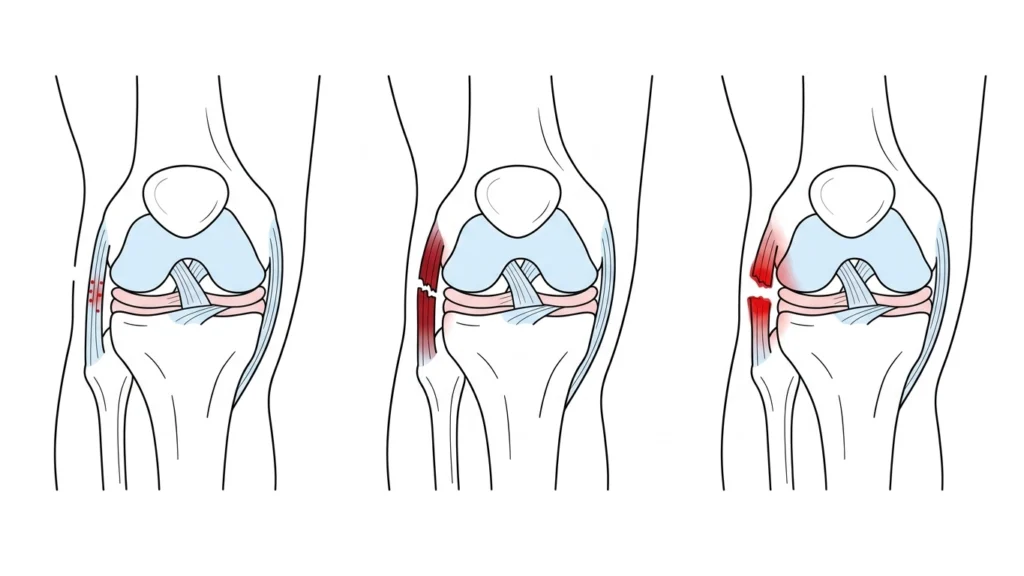
Grades of MCL Tears
Not all injuries are the same. Orthopedic surgeons categorize these tears into three distinct grades to determine the appropriate ligament tear treatment.
- Grade 1 (Mild): The ligament is stretched but not actually torn. MCL tear symptoms grade 1 usually involve tenderness and minor pain, but the knee remains stable.
- Grade 2 (Moderate): A partial tear of the ligament. You will experience noticeable instability when moving and more significant MCL pain.
- Grade 3 (Severe): A complete tear of the medial collateral ligament. The knee joint becomes significantly unstable, and the pain can be intense, though sometimes the initial sharp pain subsides into a dull, heavy ache.
What Causes MCL Ligament Tear?
The most common cause of an injury to the Mcl ligament is a direct blow to the outer aspect of the knee. This is frequent in contact sports like rugby or football. However, other causes include:
- Sudden Changes in Direction: Pivoting quickly while the foot is firmly planted.
- Overstretching: Hyperextending the knee during a fall.
- Repetitive Stress: While rare, repeated minor strains can weaken the tissue over time.
MCL Tear Symptoms and Signs
Identifying MCL tear symptoms in knee joints early can prevent further damage. While the severity depends on the grade of the injury, look for the following:
- Pain Location: MCL tear symptoms pain location is very specific. You will feel a localized ache or sharp pain on the inner side of the knee.
- Swelling: The inner knee may become puffy or bruised within a few hours of the injury.
- A “Popping” Sound: Many patients report hearing or feeling a “pop” at the moment the injury occurs.
- Instability: A feeling that your knee might “give out” or “buckle” when you put weight on it.
- Stiffness: Difficulty fully straightening or bending the knee.
Diagnosis of MCL Ligament Tear
When you visit a specialist, the diagnostic process is thorough. A professional orthopedic surgeon will typically perform a “Valgus Stress Test.” During this exam, the doctor applies pressure to the outside of the knee while the foot is held steady to see how much the inner joint opens up.
To confirm the extent of the damage, imaging may be required:
- X-rays: To rule out bone fractures.
- MRI: The gold standard for seeing the actual tear in the soft tissue and checking for secondary injuries, like meniscus tears.
MCL Tear Treatment Options
Fortunately, the Mcl ligament has a good blood supply, which means it has a high potential for self-healing compared to other ligaments. MCL tear treatment is usually divided into two paths based on the severity.
Non-Surgical Treatment of MCL Tear
The majority of Grade 1 and Grade 2 tears are managed without surgery. The protocol often includes:
- RICE Method: Rest, Ice, Compression, and Elevation.
- Bracing: Using a hinged knee brace to protect the ligament from sideways movement while it heals.
- Physical Therapy: Specialized exercises to strengthen the quadriceps and hamstrings to support the knee joint.
Try the online pain assessment quiz to rate your pain and provide Dr Usama Saleh with valuable information to help diagnose and fix your problem.
Surgical Treatment of MCL Tear
Surgery is rare for isolated MCL injuries. However, an orthopedic surgeon may recommend it if:
- The MCL is torn in a way that it cannot heal on its own (e.g., it is pulled off the bone).
- Multiple ligaments are torn simultaneously (e.g., MCL and ACL).
- Chronic instability persists despite months of physical therapy.
MCL Tear Recovery Time
A common question is: “How long is the MCL tear recovery time?”
- Grade 1: 1 to 3 weeks.
- Grade 2: 4 to 6 weeks.
- Grade 3: 8 weeks or longer, depending on whether surgery was involved.
How to Prevent MCL Ligament Tear?
Prevention is key, especially for those living an active life in the UAE.
- Strength Training: Focus on the muscles surrounding the knee.
- Proper Footwear: Wear shoes appropriate for your sport and the surface (e.g., turf vs. hard court).
- Technique: Work with a coach to ensure your pivoting and landing techniques are biomechanically sound.
Discover more about the surgical and non-surgical knee treatments offered by Dr Usama Saleh in Dubai.
Lifestyle Tips for MCL Ligament Tear
While recovering, it is vital to adjust your daily habits:
- Avoid High-Impact Activities: Swap running for swimming or stationary cycling once cleared by your doctor.
- Maintain a Healthy Weight: Reducing the load on your knee joints speeds up the healing process.
- Stay Consistent with Rehab: Skipping physical therapy is the number one cause of re-injury.
Discover Dr Usama Saleh’s case studies and real patients’ results after a successful treatment journey with him in Dubai.
Why Should You Choose Dr. Usama Saleh?
When dealing with a complex joint injury, the expertise of your specialist makes all the difference. Dr. Usama Saleh is a leading name for patients seeking world-class orthopedic care in Sharjah and the wider UAE.
With a deep understanding of the latest minimally invasive techniques and a patient-centered approach, Dr. Usama Saleh ensures that each treatment plan is tailored to the individual’s lifestyle and recovery goals. Whether you are a professional athlete or someone looking to walk pain-free again, Dr. Usama Saleh provides the authoritative care needed to navigate the complexities of ligament injuries.
Don’t let knee pain hold you back!
Contact Dr. Usama Saleh today to schedule your consultation and start your journey toward a full recovery.
FAQs About MCL Tears and Knee Health
How do I tell if a MCL is torn or sprained?
A sprain is essentially a Grade 1 tear where the fibers are stretched. A significant tear usually involves more intense swelling, a “giving way” sensation, and a more pronounced “pop” at the time of injury. A physical exam by a specialist is the only way to be certain.
How to test for MCL tear at home?
While you should never self-diagnose, you can check for tenderness by pressing on the bony bump on the inner side of your knee. If there is significant pain there and you feel unstable when standing, you should seek professional help immediately.
How long does a tear in the MCL take to heal?
Minor tears heal in about 2–3 weeks. More severe Grade 3 tears can take 2 months or more to fully stabilize and regain strength.
Can I walk with a torn MCL?
In many cases, yes, but it is not recommended without a brace. Walking with an unsupported Grade 2 or 3 tear can cause the joint to shift abnormally, potentially damaging the meniscus or cartilage.
What is the average knee replacement surgery cost?
While MCL tears rarely lead to immediate replacement, chronic instability can lead to arthritis. In the UAE, the cost of knee replacement varies significantly based on the facility and the specific technology used (such as robotic assistance). It is best to consult with Dr. Usama Saleh for a detailed breakdown of costs and insurance coverage.
Final words about mcl tear symptoms
Understanding mcl tear symptoms is vital for anyone experiencing inner knee pain. While the road to recovery requires patience and the right mcl tear treatment, most patients return to their full activity levels with proper care. By choosing a dedicated expert like Dr. Usama Saleh, you ensure that your recovery is managed with the highest medical standards in the UAE.
Take the first step toward healing today—reach out to Dr. Usama Saleh for an expert evaluation.