Best Exercises for Neck and Shoulder Pain Relief | Dr Usama

← Back to All Blogs
reasons for neck and shoulder pain

Living in a fast-paced global hub like Dubai means long hours at a desk, endless commutes along Sheikh Zayed Road, and constant screen time. Over time, this lifestyle takes a major toll on your upper body, leading to a persistent, dull ache across your upper back and shoulders. If you are struggling with daily stiffness, you are far from alone. Finding the best exercises for neck and shoulder pain can be a transformative step toward reclaiming your comfort, mobility, and productivity.

When upper body tension strikes, it can manifest as an exercise for cervical pain in neck and shoulder joints or even trigger severe migraine neck and shoulder pain. Understanding how targeted movement acts as a natural remedy is essential. Regular, low-impact exercises to relieve neck and shoulder pain do more than temporarily soothe tight muscles—they fix the underlying structural imbalances caused by modern daily routines.

Understanding the Nature of Neck and Shoulder Pain

The cervical spine is an incredible biomechanical structure designed to support the weight of your head while providing a wide range of motion. However, because the neck and shoulders are deeply interconnected by a complex web of muscles, tendons, and nerves, an issue in one area almost always triggers pain in the other.

When you spend hours leaning forward toward a computer screen or smartphone, your posture shifts. This structural deviation forces the stabilizing muscles of your upper back to work overtime. The result is chronic muscle fatigue, localized inflammation, and a significant loss of joint flexibility that leaves you feeling stiff and exhausted by the end of the day.

What Are the Neck and Shoulder Pain Symptoms?

Identifying how upper body discomfort manifests helps determine when home care is sufficient and when you need professional medical intervention. The most common indicators include:

  • Localized Muscle Soreness: A constant, dull ache concentrated in the upper trapezius muscles or along the sides of the cervical spine.
  • Sharp, Shooting Discomfort: Sudden, stabbing sensations that worsen when you turn your head or reach for objects on an elevated shelf.
  • Reduced Range of Motion: Difficulty turning your head to check blind spots while driving or experiencing stiffness when tilting your ear toward your shoulder.
  • Referred Headaches: Tension that radiates upward from the base of the skull, which can easily escalate into debilitating migraine neck and shoulder pain.
  • Numbness or Tingling: A pins-and-needles sensation that travels down into your shoulder blade, arm, or fingers, often indicating nerve compression.

What Are the Causes of Neck and Shoulder Pain?

To effectively eliminate discomfort, you must first pinpoint its origin. While poor ergonomics is a frequent culprit, several distinct factors contribute to upper body issues:

  • Forward Head Posture: For every inch your head juts forward, you add roughly 10 pounds of extra pressure on your cervical spine.
  • Muscle Imbalances: Weak upper back muscles combined with tight chest muscles pull the shoulders forward into a permanent slouch.
  • Nerve Compression: Herniated discs or bone spurs in the cervical spine can press against nerve roots, sending radiating pain through the shoulder girdle.
  • Repetitive Strain Injuries: Performing the same overhead movements or holding an awkward posture for extended periods without adequate breaks.
  • Traumatic Injuries: Past whiplash from a vehicular accident or sports-related micro-tears that never fully healed.

Does Stress Cause Neck and Shoulder Pain?

Yes, stress is a massive physical trigger for upper body tension. When you experience psychological stress or anxiety, your body naturally enters a “fight or flight” mode. This physiological state causes you to subconsciously clench your jaw, elevate your shoulders toward your ears, and tighten your neck muscles.

Over time, this constant, involuntary muscle contraction restricts localized blood flow. It deprives your tissues of oxygen and causes metabolic waste products to build up, leaving you with painful trigger points and chronic muscle knots.

How to Relieve Neck and Shoulder Pain at Home

Before starting a focused workout routine, you can use simple, highly effective home remedies to calm acute flare-ups and prepare your muscles for movement:

  • Strategic Thermal Therapy: Apply a warm heating pad for 15 to 20 minutes to relax stiff muscles and boost localized blood circulation. If you experience sharp, sudden inflammation after a strenuous workout, swap the heat for an ice pack wrapped in a cloth to numb the area.
  • Ergonomic Workspace Redesign: Position your computer monitor directly at eye level so you do not have to tilt your chin down. Use a supportive desk chair that keeps your lower back stabilized and allows your forearms to rest parallel to the floor.
  • Postural Micro-Breaks: Set a recurring timer every 45 minutes to stand up, roll your shoulders backward, and realign your spine.
  • Hydration and Electrolytes: Keep your muscle tissues supple and prevent painful, involuntary cramping by drinking plenty of water throughout the day.

What Are the Best Exercises for Neck and Shoulder Pain?

A comprehensive therapeutic routine should always incorporate three distinct modalities: dynamic warm-ups to increase blood flow, strengthening movements to stabilize the joints, and static stretches to restore tissue elasticity.

1. Dynamic Stretches for the Neck and Shoulders

Dynamic stretches safely increase the temperature of your soft tissues, lubricate your joints with synovial fluid, and prepare your nervous system for movement.

  • The Chin Tuck: Sit up tall with your shoulders relaxed. Look straight ahead and gently draw your chin straight back, as if you are trying to make a double chin. Hold for 3 seconds, then release. Repeat this movement 10 times to decompress the base of your skull.
  • Controlled Shoulder Rolls: Slowly lift your shoulders up toward your ears, roll them backward in a smooth circular motion, and drop them down. Complete 10 backward circles, then reverse the direction for another 10 repetitions to release suboccipital and trapezius tension.
  • Cervical Rotations: Slowly turn your head to the right until you feel a gentle stretch, hold for 2 seconds, and then smoothly rotate to the left. Complete 10 controlled repetitions on each side.

2. Strengthening Exercises

Building strength in the deep stabilizers of your neck and upper back is the absolute best way to protect your joints from long-term postural strain.

  • Scapular Squeezes: Stand with your arms at your sides. Imagine squeezing a tennis ball directly between your shoulder blades. Draw your shoulders back and down, hold the contraction firmly for 5 seconds, and slowly release. Perform 3 sets of 12 repetitions.
  • The Wall Angel: Stand with your back, head, and heels flat against a wall. Raise your arms to a 90-degree angle, keeping your elbows and wrists in contact with the surface. Slowly slide your arms upward overhead, then pull them back down into a “W” shape. Perform 2 sets of 10 controlled repetitions.
  • Prone Y-to-T Raises: Lie face down on a comfortable mat with your arms extended diagonally overhead in a “Y” position, thumbs pointing toward the ceiling. Lift your chest and arms slightly off the floor using your upper back. Lower down, move your arms out straight to the sides into a “T” position, and lift again. Perform 3 sets of 10 repetitions.

3. Static Stretches for After Your Workout

Static stretching helps lengthen hypertonic (chronically shortened) muscles, lowers overall muscle tone, and promotes long-term flexibility.

  • Upper Trapezius Stretch: Sit firmly on your right hand to pin your shoulder down. Gently place your left hand on top of your head and ease your left ear down toward your left shoulder. Hold this position for 30 seconds, breathe deeply, and repeat on the opposite side.
  • Levator Scapulae Stretch: Sit tall and turn your head 45 degrees to the right, looking down toward your right armpit. Gently apply downward pressure with your right hand until you feel a deep stretch along the back of your neck. Hold for 30 seconds before switching sides.
  • Doorway Chest Stretch: Stand in an open doorway, placing your forearms flat against the doorframe at a 90-degree angle. Gently step one foot forward until you feel an opening across your chest and the front of your shoulders. Hold for 30 seconds to counteract slouching.

Maximizing Your Recovery: Consistency and Safety

To get the absolute best results from your rehabilitation routine, you must understand exactly how to dose, monitor, and regulate your movements safely.

How Many Should You Practice the Best Exercises for Neck and Shoulder Pain?

For your active strengthening movements, aim to complete 2 to 3 sets of 10 to 12 controlled repetitions. For your static stretches, perform 2 to 3 repetitions per side, holding each stretch for a full 30 seconds to give the muscle fibers adequate time to elongate.

How Often Should You Practice the Best Exercises for Neck and Shoulder Pain?

Gentle dynamic stretches can be performed 2 to 3 times every day, making them a perfect addition to your office routine. Dedicated strengthening exercises should be practiced 3 to 4 times a week, ensuring you leave a day of rest between sessions for optimal muscular recovery.

When to Stop Practicing These Exercises

Movement should feel like a deep, therapeutic release. Immediately stop your routine if you experience sharp, stabbing pain, sudden dizziness, a worsening headache, or radiating numbness that spreads down your arms. These symptoms indicate that a nerve may be compressed or a joint is overly irritated.

How to Know You Are Practicing in the Right Way

You are performing these exercises correctly if you feel a dull, satisfying stretch or a mild muscular burn in the targeted areas, rather than discomfort inside the spinal joints. Your breathing should remain slow and steady throughout each movement, and your posture should improve progressively over time.


Advanced Professional Care in Dubai

While targeted home movements are incredibly powerful, severe or structural musculoskeletal issues require an expert diagnostic approach to ensure long-term resolution.

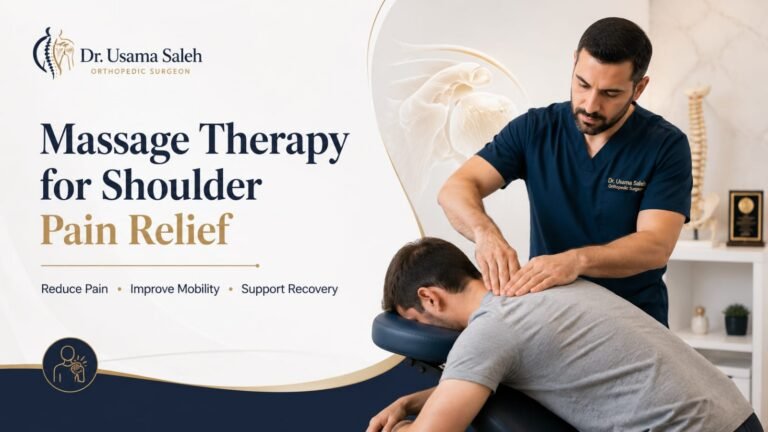
What is the Best Massage for Neck and Shoulder Pain?

For chronic upper body issues, a clinical deep tissue massage or trigger point therapy is highly recommended. Unlike a generic relaxation massage, a clinical medical massage focuses specifically on breaking down dense scar tissue, releasing stubborn myofascial adhesions, and restoring healthy blood flow to hypertonic muscle layers.

Which Doctor to Consult for Neck and Shoulder Pain?

If your discomfort persists for more than two weeks despite consistent stretching, you should consult an expert orthopedic specialist. A qualified orthopedic doctor can perform advanced physical evaluations, order diagnostic imaging like X-rays or MRIs, and create a comprehensive, non-surgical treatment plan tailored to your specific anatomy.

Experience Elite Orthopedic Relief with Dr. Usama Saleh

You do not have to live with life-disrupting upper body stiffness or rely entirely on temporary home remedies. Seeking specialized care from a world-class expert is the fastest way to understand your pain and protect your long-term spinal health.

As a highly respected orthopedic specialist, Dr. Usama Saleh provides comprehensive, cutting-edge diagnostics and customized treatment plans designed specifically for your active lifestyle. Whether you require advanced myofascial therapies, targeted joint injections, or a customized rehabilitation plan, his clinic offers the premium medical care you deserve right here in Dubai.

If you are ready to stop managing your symptoms and start treating the root cause of your discomfort, take the first definitive step toward a pain-free life today. Visit the official website of Dr. Usama Saleh Orthopedic Care to explore advanced treatment options, read inspiring patient success stories, and easily book your comprehensive clinical consultation online.

Frequently Asked Questions

How to sleep with neck and shoulder pain?

Sleep on your back or your side using a supportive contoured cervical pillow that keeps your head, neck, and spine perfectly aligned. Side sleepers should place an extra pillow between their knees and avoid sleeping with their arm tucked directly under their head, which can compress the brachial plexus nerves.

Yes. When the muscles at the base of your skull become chronically tight, they can irritate the greater occipital nerves. This nerve irritation triggers referred pain that travels over the top of your head, resulting in cervicogenic headaches or intense migraine neck and shoulder pain.

Mild upper back and neck tension caused by simple postural strain typically resolves within 1 to 2 weeks of consistent stretching and ergonomic adjustments. However, if the underlying pain stems from a structural issue like a herniated disc, recovery may take several weeks and require specialized orthopedic treatment.

The fastest way to achieve acute relief is to combine a warm compress with gentle dynamic movements like chin tucks and shoulder shrugs. This increases localized blood flow and coaxes hypertonic muscles out of a painful spasm, giving you immediate relief.

If you are experiencing severe, sharp pain, radiating numbness, or acute inflammation, avoid strenuous workouts and rest the area. Instead, stick to very gentle, non-weight-bearing dynamic mobility stretches, and schedule a professional medical evaluation to ensure you do not worsen an underlying injury.

Conclusion

Taking proactive control of your physical health is the single most effective way to eliminate chronic upper body tension. By integrating the best exercises for neck and shoulder pain into your weekly routine, you can actively reverse the damage caused by prolonged sitting, protect your cervical spine, and significantly reduce your daily stress levels.

However, lasting relief requires a combination of consistency at home and expert medical guidance when you need it. If you are tired of dealing with recurring stiffness, let a dedicated specialist guide your recovery. Reach out to Dr. Usama Saleh to get an accurate diagnosis and a customized recovery plan. Visit his official clinical platform today to book your appointment and rediscover what it feels like to move with absolute freedom.

References

  • American Academy of Orthopaedic Surgeons (AAOS): Trusted medical guidelines for rotator cuff and upper body conditioning programs.
  • National Health Service (NHS Inform): Clinical exercise resources and safety frameworks for managing acute cervical conditions.
  • Harvard Health Publishing: Expert medical insights regarding the biomechanics of forward head posture and tension headaches.

Book an Appointment with Dr. Usama Saleh

Contact Form dr

Powered by ICONCLY Medical.

Copyright © 2026. All rights reserved.

Patient Connection Hub Assess your pain