Insights

Massage for Shoulder Pain Relief: Dr Usama’ Orthopedic Guide

Struggling with stiff, aching joints? Discover how using targeted massage for shoulder pain relief can restore your mobility. Learn expert recovery tips
August 27, 2026 10 min read

Shoulder pain can make daily life feel like an uphill battle. Whether you are lifting groceries, typing at your desk, or trying to find a comfortable sleeping position, a stiff and aching shoulder limits your freedom. For residents navigating a busy, fast-paced lifestyle in Dubai, finding an efficient and lasting solution to orthopedic discomfort is essential. One of the most effective non-invasive methods gaining recognition worldwide is therapeutic soft tissue manipulation. Using specialized massage for shoulder pain relief can break the cycle of muscle tension, restore lost mobility, and accelerate your body’s natural healing processes.

When dealing with chronic joint stress, targeting a specific massage point for shoulder pain can provide targeted relief. However, long-term recovery involves more than temporary fixes. True orthopedic wellness requires understanding the root cause of your discomfort. Under the expert guidance of renowned orthopedic specialists like Dr Usama saleh, patients receive comprehensive care that blends diagnostic precision with highly effective therapeutic recovery plans.

If you are currently struggling with upper body stiffness, understanding how targeted soft tissue therapy works is the first step toward reclaiming your active life. Let’s explore the intricate mechanics of your upper body and find out how a proper massage for shoulder pain can transform your physical health.

How Your Shoulder Works

The shoulder is the most mobile joint in the human body. Unlike the hip joint, which sits securely inside a deep bony socket, the shoulder functions much like a golf ball sitting on a tiny tee. This unique anatomical setup gives you the ability to rotate your arm a full 360 degrees, but it relies heavily on soft tissues to remain stable.

The structural foundation of this joint depends on several key components:

  • The Rotator Cuff: A group of four muscles (supraspinatus, infraspinatus, teres minor, and subscapularis) that form a protective sleeve around the joint. They work continuously to hold the upper arm bone securely within its shallow socket.
  • Tendons and Ligaments: Strong bands of fibrous tissue that anchor muscles to bone and prevent the joint from overextending during movement.
  • The Bursa: A small, fluid-filled sac that acts as a lubricating cushion, reducing friction between moving bones and tendons.

Because these muscles and tendons are constantly under tension to maintain stability, they are highly susceptible to fatigue, micro-tears, and chronic tightness. When a single muscle group becomes overworked, it alters the alignment of the entire joint, resulting in localized inflammation and restricted movement.

Understanding Shoulder Pain and Stiffness

Shoulder discomfort rarely appears out of nowhere. It usually begins as a subtle, dull ache that gradually intensifies over time. When soft tissues become irritated or damaged, your body initiates a protective mechanism known as muscle guarding. To prevent further injury, the surrounding muscles contract tightly around the joint. While this reflex protects you initially, prolonged guarding cuts off optimal blood flow, locks the joint in place, and causes stubborn stiffness.

In a dynamic city like Dubai, where many individuals spend long hours working on laptops or engaging in intense fitness routines, this stiffness can quickly become chronic. This is where therapeutic massage for shoulder pain relief plays a crucial role. By systematically releasing contracted muscle fibers, specialized bodywork restores local circulation, delivers oxygen to damaged tissues, and helps flush out metabolic waste products that cause localized soreness.

Common Causes of Shoulder Pain

To treat upper body discomfort effectively, you must identify what is causing the irritation. Orthopedic issues generally stem from a few distinct conditions:

  • Rotator Cuff Tendonitis and Tears: Repetitive overhead movements or sudden lifting can strain or tear the rotator cuff tendons, leading to sharp pain when reaching backward or lifting objects.
  • Frozen Shoulder (Adhesive Capsulitis): This condition causes the connective tissue capsule surrounding the joint to become thick, inflamed, and tight, severely restricting your range of motion.
  • Bursitis: Chronic friction can cause the fluid-filled bursa to swell, resulting in a persistent, localized ache that feels worse when you press on the side of your arm.
  • Postural Strain: Sitting with rounded shoulders stretches the upper back muscles while shortening the chest muscles, creating painful trigger points around the shoulder blades.

Natural Options for Shoulder Pain Relief

While prescription pain medications can mask symptoms temporarily, they do not resolve the mechanical imbalances causing your discomfort. Incorporating natural, non-invasive therapeutic options provides a more holistic approach to lasting recovery.

  • Targeted Soft Tissue Therapy: Undergoing a structured massage for shoulder pain relaxes spasming muscles and lowers local tissue pressure.
  • Thermal Therapy: Applying a heating pad for 15 minutes relaxes tight muscles and boosts blood flow, while cold therapy reduces acute inflammation after a flare-up.
  • Ergonomic Adjustments: Modifying your office chair, desk height, and screen placement keeps your joints aligned and prevents unnecessary muscle strain.

Best Massage Techniques for Shoulder Pain

Not all bodywork techniques are identical. To relieve stubborn joint tension, a skilled therapist will use specific methods tailored to your injury’s unique characteristics.

Targeted Professional Techniques

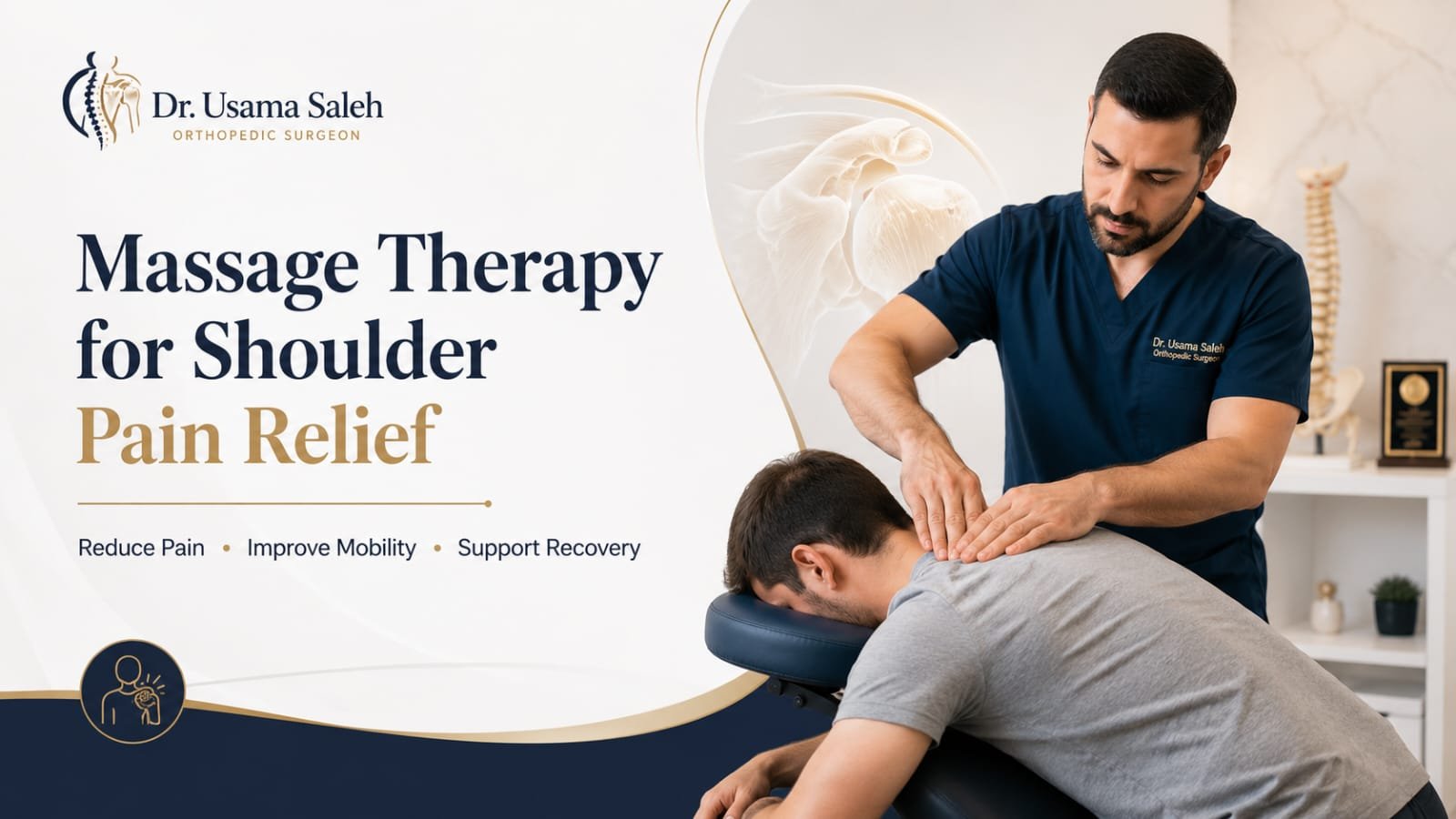
  • Trigger Point Therapy: This technique focuses on identifying a highly hyperirritable massage point for shoulder pain, such as a knot in the infraspinatus muscle. Applying steady, direct pressure to these spots deactivates the pain signal and relaxes the entire muscle strand.
  • Myofascial Release: Therapists apply slow, sustained pressure to stretch and loosen the restricted fascia—the web of connective tissue wrapping around your muscles—restoring fluid, smooth joint movement.
  • Deep Tissue Massage: This method targets deeper layers of muscle tissue using firm, deliberate strokes, making it highly effective for breaking down old scar tissue and chronic knots caused by postural strain.

How to Massage at Home

If you need immediate relief between clinical appointments, self-care techniques can help manage your symptoms:

  1. The Tennis Ball Method: Place a tennis ball or lacrosse ball between your upper back and a wall. Gently lean your body weight into the ball, rolling it around your shoulder blade until you find a tight spot. Hold steady pressure there for 30 to 60 seconds.
  2. Gentle Kneading: Reach across your chest with your opposite hand and firmly grip the top of your trapezius muscle (the tissue between your neck and shoulder). Gently squeeze and knead the tissue to encourage blood flow.

Shoulder Pain Exercises and Stretches

To maintain the flexibility gained from a therapeutic massage for shoulder pain, you should perform targeted stretches daily. These movements keep your muscles elongated and prevent stiffness from returning.

  • The Doorway Stretch: Stand in an open doorway, placing your forearms against the doorframe at a 90-degree angle. Step one foot forward until you feel a gentle stretch across your chest and front shoulders. Hold for 30 seconds.
  • Pendulum Exercise: Lean forward, resting your non-injured hand on a sturdy table for support. Let your painful arm hang straight down toward the floor. Gently swing your arm in small circles, letting momentum do the work. Perform 10 circles in each direction to safely lubricate the joint.

Preventing Shoulder Problems

Preventing an injury is always easier than treating one. Protecting your joints from daily wear and tear requires building healthy habits:

  • Avoid One-Sided Strain: Avoid carrying heavy laptop bags or purses consistently on the exact same shoulder; switch sides regularly to distribute the mechanical load.
  • Strengthen the Upper Back: Focus on exercises like seated rows and face pulls to build strong upper back muscles, which naturally pull your shoulders back into ideal alignment.
  • Take Regular Micro-Breaks: If you work a desk job, stand up every 45 minutes to roll your shoulders backward and open up your chest.

When Should You Visit a Doctor?

While home care and soft tissue therapy are highly effective for muscle fatigue, certain symptoms indicate a more serious structural issue. You should consult a medical professional immediately if you experience:

  • An inability to lift your arm past waist level.
  • Sharp, severe pain accompanied by visible joint deformity or swelling.
  • Numbness, tingling, or weakness radiating down your arm into your hand.
  • Discomfort that persists for several weeks despite rest and conservative home treatment.

Why Should You Choose Dr Usama Saleh in Dubai?

When managing complex bone and joint conditions, finding specialized expertise is vital for a safe and complete recovery. Dr Usama Saleh stands out as a premier destination for advanced orthopedic care in Dubai. Taking a patient-centered approach, Dr Usama saleh focuses on pinpointing the exact structural or muscular imbalance causing your discomfort rather than simply treating your symptoms.

By combining cutting-edge diagnostic technology with tailored, non-invasive treatment strategies, his clinic ensures that every patient receives a customized plan designed for their unique lifestyle. Whether your condition requires targeted physical rehabilitation, regenerative medical techniques, or expert guidance on therapeutic soft tissue care, Dr Usama saleh provides the authoritative, empathetic care you need to get back to peak physical function.

If you are ready to break free from persistent upper body discomfort and experience lasting joint health, take the first step today. Visit the official website of Dr Usama saleh to book a comprehensive evaluation and start your journey toward a pain-free life.

Conclusion

Living with constant upper body stiffness can limit your quality of life, but you do not have to accept it as a permanent burden. Utilizing a focused massage for shoulder pain relief is a proven, natural way to alleviate muscle spasms, increase your range of motion, and help your body heal. By understanding how your joints function, addressing the root causes of your symptoms, and working with top-tier specialists like Dr Usama saleh, you can protect your long-term mobility. Prioritize your physical health today so you can enjoy a vibrant, active lifestyle tomorrow.

FAQs

Should you massage a painful shoulder?

Yes, massaging a painful shoulder can be highly beneficial, provided the discomfort stems from muscular tension, trigger points, or chronic postural strain. Gentle manipulation helps improve localized blood flow and eases protective muscle spasms. However, you should avoid direct, deep pressure if the joint is suffering from an acute injury, such as a fresh ligament tear, dislocation, or severe inflammation.

Clinical studies show that therapeutic bodywork significantly lowers cortisol levels—the body’s primary stress hormone—while boosting serotonin and dopamine production. Lowering your stress hormones relaxes your nervous system, reduces global muscle tension, and changes how your brain processes chronic pain signals.

While manual therapy cannot rebuild lost muscle mass on its own—which requires active resistance exercise—it supports the recovery process. Massage therapy improves blood circulation and lymphatic drainage in atrophied areas, delivering vital nutrients to the tissues, reducing stiffness, and keeping your joints flexible enough to perform strengthening exercises safely.

For fast temporary relief, try resting the joint and applying a cold compress for 15 to 20 minutes to numb acute pain and lower inflammation. Performing gentle pendulum exercises can also safely lubricate the joint capsule and relieve deep pressure without straining your rotator cuff muscles.

Patient Connection Hub Assess your pain